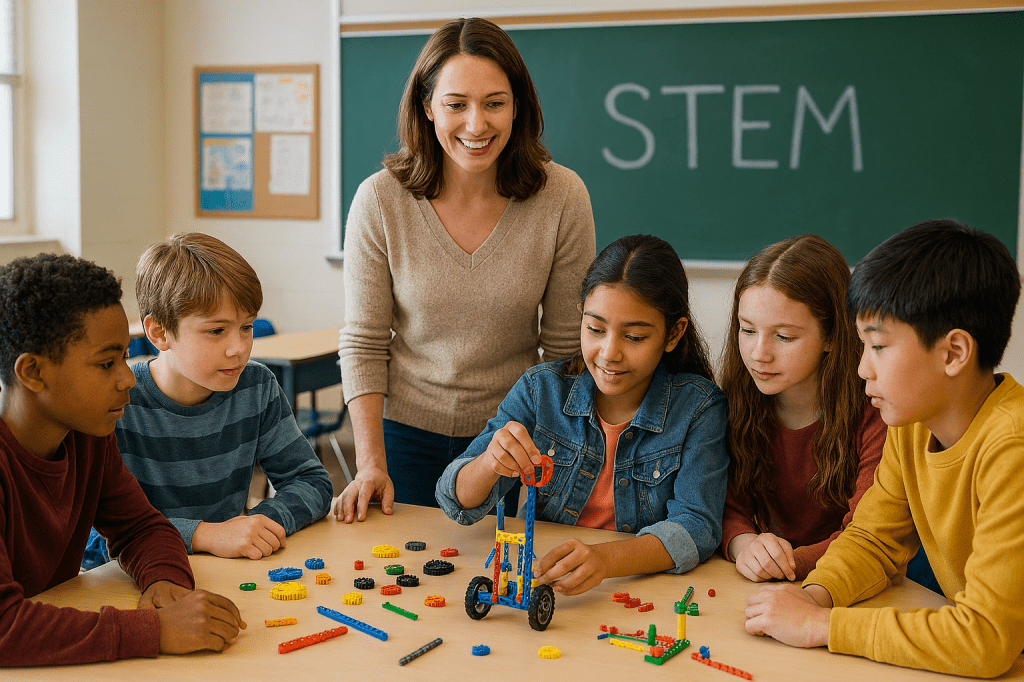
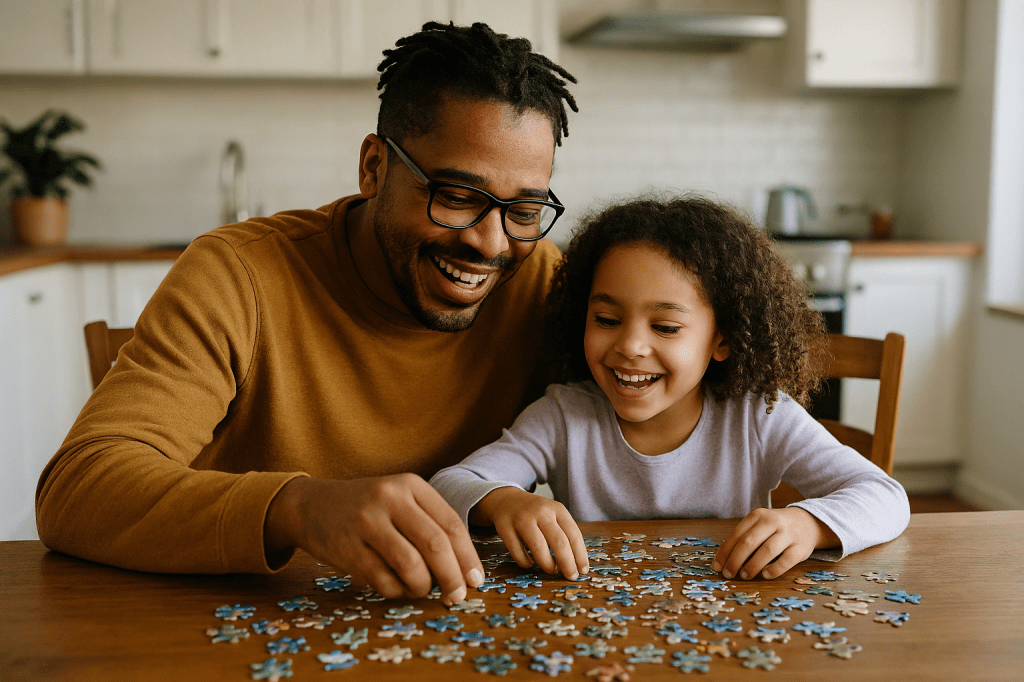
Choosing Sides in Education

One of the things I’ve noticed over my almost 40 years in public education is that we love a good debate.

If you’ve spent any time in schools, you’ve likely heard the back-and-forth conversations:

  • Knowledge versus competencies
  • Direct instruction versus inquiry
  • Technology versus books
  • Traditional practice versus innovation

Before long, people find themselves in camps, defending positions as though educational success depends on choosing the “right” side.

The problem? Most of the important questions in education aren’t ‘either-or’ questions. They’re ‘both-and’ questions.
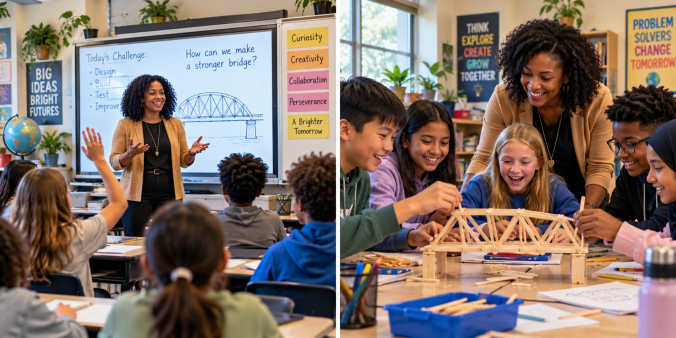
Direct Teaching & Discovery Learning

I am reminded of this when I visit classrooms. In one room, a teacher may be explicitly teaching a concept, carefully modelling thinking and providing students with clear direction. At another time, those same students can be working collaboratively, asking questions, solving problems, and applying their learning in ways that were meaningful to them.

So which approach is better?

Neither … and both.

The real success isn’t found in the strategy. It’s found in the teacher’s ability to understand what those learners need at that moment.

As parents, we’ve all likely seen something similar at home. There are moments when our children need structure, routine, and clear expectations. There are other moments when they need freedom, exploration, and the opportunity to figure things out for themselves. Most of us intuitively know that effective parenting requires both. Yet in education, we sometimes act as though we need to choose one side or the other.

Why?

Perhaps because labels are easier than complexity.

It’s easier to advocate for a program, a methodology, or a philosophy than it is to wrestle with the reality that learners are wonderfully diverse. What works brilliantly for one child may not work for another. What transforms learning in one classroom may need significant adaptation in the classroom next door.

That’s the challenge and the beauty of education.

I’ve often written about the importance of asking why. When we become overly attached to a particular approach, we can lose sight of the reason we adopted it in the first place. The conversation shifts from “What are students learning?” to “Which method is best?” These are not the same questions.
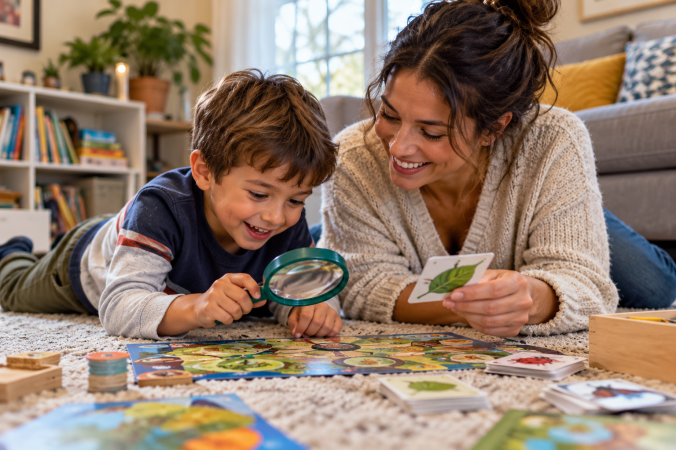
Parents know that teaching children and allowing them to build their independent abilities are both critical for strong development

The schools I most admire are not defined by educational extremes. They are not constantly searching for the next silver bullet or defending every existing practice. Instead, they remain relentlessly focused on learners and being open to change.

They ask:

  • What do our students need at this time?
  • What evidence do we have that learning is occurring?
  • How might we adapt our approaches right now to better serve the learners in front of us?

Those questions create much richer conversations than debates about instructional camps.

The reality is that great teaching has always been both science and art. Research matters. Evidence matters. Effective practices matter — but, so do professional judgement, relationships, timing, and context. A strategy that is powerful in one setting may be ineffective in another. A teacher’s expertise lies not simply in knowing a collection of strategies, but in knowing when and why to use them.

That requires flexibility. It requires humility. And most importantly, it requires an openness to doing something differently.

When we do these things, many of education’s most polarizing debates begin to fade into the background.

The question is no longer whether we should choose direct instruction or inquiry, knowledge or competencies, technology or books.

The question becomes much simpler: “In this moment, what will best help this learner thrive?”

When we start there, we stop choosing sides. And we start finding solutions.

Digital Leadership in K–12: Harnessing AI Without Losing Humanity

I still remember the thrill of moving from my trusty Brother electric typewriter to a remote computer terminal. I’d type out a paper at the University of Calgary, send it across campus to the printer station, and — assuming someone was there — I’d find my term paper neatly placed in a pigeonhole. No more whiteout, no more misaligned type. Just a professional looking report. It felt like magic.

Captain Kirk at the Starship’s Computer

Back then, the future was something we saw on TV. In the 1960s and 70s, Star Trek imagined a world where Captain Kirk could simply ask the ship’s computer a question and get an instant, logical response. That seemed centuries away.

But here we are today where artificial intelligence (AI) can answer your questions in real time, scanning vast databases for what it thinks is the best response. Not perfect — just reasonable. Still, it feels like magic.

I’ve written before about AI’s potential in school (The Sky is Falling … AGAIN, Jan 2023) — personalized instruction, student assessment, lesson generation. But it’s not just about teaching and learning. AI has the ability of transforming the business side of K–12 as well — student registration, policy or procedure inquiries, workflow improvements, even analyzing population growth trends. And that’s only scratching the surface.

THE VISION: Harness AI to improve student learning and success while limiting misuse and risk.

AI is everywhere — digital assistants, search engines, social media, online shopping, fraud prevention, gaming, medical diagnosis. The list goes on. But with this leap forward come real concerns: deepfakes, bias, privacy violations, job security, hacking, intensive energy consumption and more.

So, where do schools fit in? How do we balance possibilities with risks?

To begin, we keep asking the important questions:

  • What bias and accuracy does this AI tool bring?
  • Does it make sense to use it in a particular place? Will it improve student access to their learning?
  • How do we protect data privacy?
  • How do we preserve critical thinking skills?
  • How do we keep human connections at the center?

Actively exploring its possibilities is not only important, it’s also non-negotiable. As AI’s capabilities evolve, waiting until ‘things have settled’ is like waiting for the grass to stop growing before you mow it. You might as well start now, because it’s only going to get more difficult the longer you wait.

We’ve done this before. Think calculators. Think the internet. Both were disruptive. Both raised concerns. Yet we found ways to integrate them without losing the essence of learning. Calculators didn’t erase math skills. The internet didn’t destroy originality — plagiarism existed long before Google. We adapted. We can do it again.

My point here is not to minimize the real and potential risks of AI — they are there — but, instead to chart a path of exploration that can maximize its advantages while minimizing the risks. Yes, there are bigger challenges with AI than with the calculator and the internet — primarily because AI is evolving so quickly, and we don’t know what next month will look like, let alone next year. Yet, it’s potential for improved access to curriculum, personalizing the educational experiences, building student success, and enhancing the business side of education is unparalleled.

Why AI Matters for Kids’ Brains

Can technology actually help our kids’ brains grow? Yes, if we use it wisely.

Here’s the good news — AI can be a powerful ally for brain development. AI can personalize learning, offering challenges that match a child’s pace and providing instant feedback. Research shows this supports executive functions like working memory and cognitive flexibility. When used wisely, AI can help teachers focus on what they do best — inspiring curiosity and connection.

But here’s the catch — too much automation can strip away the human connection that fuels motivation. Brains aren’t just processors — they’re social organs. Kids need eye contact, laughter, and human connection. Schools are where this happens. When I ask students what’s working for them, they never say “the technology”. They talk about teachers, administrators, counselors, educational assistants—the people who connect with them on a daily basis.

Human connections build confidence, understanding and competence — technology is a tool, not the teacher.

Of course, every shiny tool has a shadow. Over-reliance on AI can lead to passive learning, reduced creativity, and data privacy concerns. AI algorithms aren’t perfect — they carry biases that affect their output, so teaching about these potential biases help us manage how and where we use the tool.

So, what’s the solution? Balance.

Digital leadership means creating guardrails so AI enhances — not replaces — the human elements of learning. Think of AI as the sous-chef, not the head chef. It can chop the veggies, but the teacher still crafts the recipe. In Saanich, as part of our own guardrails we developed an Artificial Intelligence Framework built on four themes:

  • Teaching & Learning
  • Inclusion and Accessible Learning
  • Ethical Use
  • Privacy, Security & Safety

What Can Parents Do?

You don’t need a tech degree to stay involved. Encourage screen-time boundaries. Promote activities that build executive function outside of the tech world — things like puzzles, outdoor play, and storytelling. The best brain development happens when kids combine digital learning with real-world experiences — with trusted adults being the glue and the motivation.

AI in education isn’t a villain or a superhero — it’s a tool. In the hands of thoughtful leaders and engaged parents, it can help kids develop the cognitive skills they need for a complex world. But, we’re also not losing sight of the human heartbeat in learning.

Because, no algorithm can replace the magic of a teacher who believes in your child — or the joy of a parent cheering them on.

(This post was written by the author. AI created some of the images as well as reviewing the post for flow and grammar.)

Why Students (and Adults) Struggle to Be Wrong — and How to Help

The beginning of my career had me teaching high school Science, Chemistry and Math. One of my fondest memories was organizing science fairs at two different schools. The science fair was a great way for my students to expand both their knowledge in an area of interest, as well as give them practical experience in the scientific method.

Here’s an example of a typical conversation I might have had:

Two Grade 9 students set out to test whether plants grow better when exposed to music. They were excited, confident, and — after two weeks — convinced they were right. The plants exposed to music looked ‘happier’, they told me.

But when I gently pointed out that the control group had actually grown taller, they hesitated. “Maybe the music plants are just slower starters.”

The students aren’t being dishonest. They are being human — exhibiting something called Confirmation Bias.

Confirmation Bias: Our brain’s tendency to seek out, interpret and remember information that supports what we already believe.

It’s why a student who thinks they’re ‘bad at math’ might ignore a good test score one day, or why a child convinced their teacher or another student doesn’t like them may interpret neutral feedback from others as criticism.

It’s not a character flaw. It’s a feature of cognition — especially in an adolescent brain.

The Brain’s Shortcut System

Our brains are wired for efficiency. Every second, we’re bombarded with sensory input, and to make sense of it all, the brain relies on heuristics — mental shortcuts that help us make quick decisions. Daniel Kahneman, Nobel laureate and author of Thinking, Fast and Slow, describes this as the interplay between “System 1” (fast, intuitive thinking) and “System 2” (slow, analytical thinking). Confirmation Bias lives in System 1 — it’s fast, automatic, and invisible.

This heuristic shortcut helps us feel safe and certain. Confirmation Bias allows us to make sense of something very quickly. But, in a learning environment, it can unfortunately also close the doors to a more complete understanding.

The Adolescent Brain and Belief Formation

Children and adolescents are especially vulnerable to Confirmation Bias. Their prefrontal cortex — the part of the brain responsible for critical thinking and self-regulation — is still developing well into their twenties. Research shows that the adolescent brain is particularly sensitive to social feedback. Beliefs formed during adolescence can become deeply entrenched and difficult to unseat — hence, the problem of changing “I can’t do math” or “Susie doesn’t like me”.

In school, this means that early experiences — both positive and negative — shape how students see themselves as learners for years to come.

When Confirmation Bias Meets the Curriculum

Confirmation Bias doesn’t just affect how students see themselves. It influences how they engage with content. A student who believes that History is ‘boring’ may skim over content that is actually really engaging. Someone who thinks that science is‘ too hard’ might dismiss their own curiosity on the topic. This same idea applies to every subject area depending on what a student believes — they can’t do math, sing, dribble a basketball, or bake a cake.

And when students are asked to explore controversial or difficult topics — things like climate change, historical injustices, or ethical dilemmas — Confirmation Bias can make it harder to consider multiple perspectives. This can close the door to exploring deeper, more complete truths.

Teachers as Cognitive Coaches

Educators play a powerful role in shaping how students process information. The way we frame questions, give feedback, and design lessons can either reinforce or disrupt Confirmation Bias.

When students actually believe their abilities can grow, they’re more likely to embrace challenges and revise their thinking. But this requires intentionality on the part of teachers, parents and others who work with them. A well-meaning comment that they’ve done a ‘good job‘ can actually reinforce a fixed belief just as easily as it can encourage growth.

Disrupting Confirmation Bias

So how do we help students see beyond what they already believe?

  • Ask open-ended questions — Invite multiple interpretations of the same issue or event.
  • Encourage metacognition — Have students reflect on how they’re thinking, not just what they’re thinking.
  • Introduce disconfirming evidence — What would it take to change their mind?
  • Model intellectual humility — Share moments when you’ve changed your own thinking.

Technology and Media

In today’s world, Confirmation Bias doesn’t stop at the classroom. In a previous post (Implicit Bias: Yup, I’m Talking About You! – Feb 2022) I discussed how social media (e.g. Instagram, TikTok, X, Facebook) is designed to confirm our bias by showing us posts and reels that agree with us — in direct contradiction to what we hope to be doing in classrooms. For young minds still forming their worldviews, this can reinforce narrow thinking as they settle into the belief that they must be right because “I see it everywhere on social media.“

In Saanich Schools, teaching digital literacy — how to evaluate sources, question algorithms, and seek diverse perspectives is something we put a lot of effort into and will continue to do so.

A New Kind of Resilience

Helping students challenge their own beliefs isn’t about changing their views on being right. It’s about building cognitive resilience — the ability to sit with uncertainty, to revise one’s thinking, and to grow — to be confident enough in oneself to be open to other perspectives and, yes, to maybe being wrong.

And, let’s be clear, it’s not just students. Many adults also have a difficulty being wrong.

It’s why we see slow change on things that are destructive or hurtful — we know better, but we still carry on. Think of things like climate change, growing income disparity, intolerance towards others, stereotyping, and bigotry.

All of them wrong, yet they persist.

Building cognitive resilience is not just learning — it’s transformation. It’s building reflective, curious young people who are open to new ideas that can solve existing and future problems.

Teaching for Curiosity, Not Certainty

Education isn’t about filling students with facts. We have come past the point of thinking the goal of K-12 education is simply placing more facts and figures into their heads — yes, there are important lessons from history, science, math, reading, and physical literacy — however, education is about teaching students HOW to think, HOW to question, and HOW to stay curious — HOW to be open to conflicting information that should challenge one’s current understanding.

It’s about them being confident enough in themselves to be unsure.

Confirmation Bias is a natural part of being human. But when we help students recognize it, name it, and work through it, we give them a gift far greater than facts and certainty.

We give them the tools to keep learning.

(This post was written with assistance of an AI prompt on exploring confirmation bias in education. I changed much of the content and added significantly to the final product.)