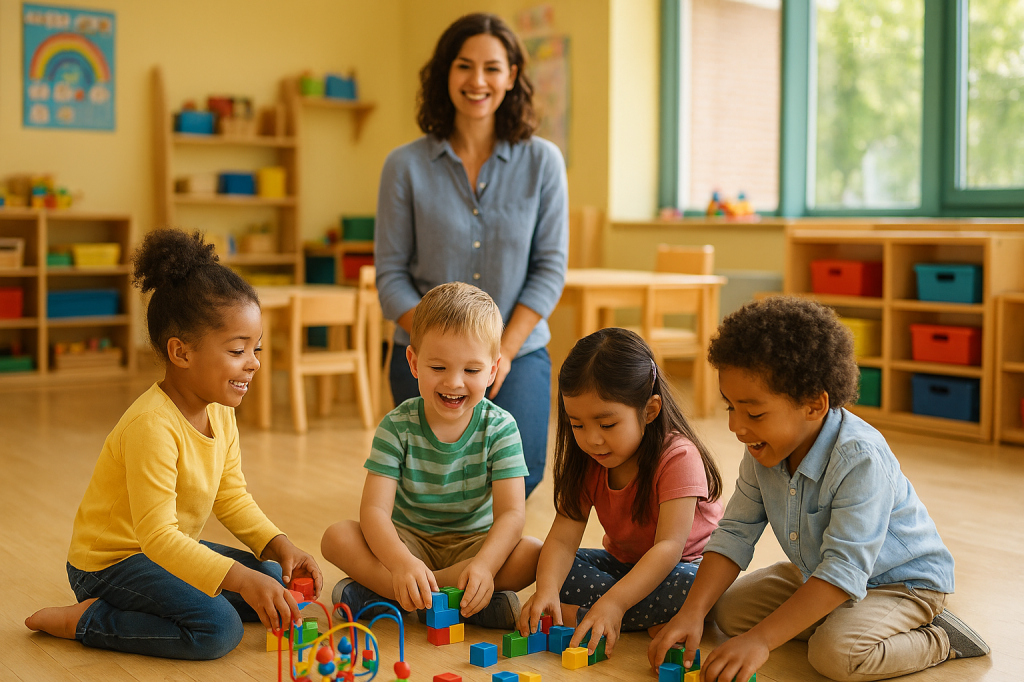
Executive Functions are our ‘Air Traffic Control’ System

Searching for the Invisible Skills of Executive Functioning

One of the most effective determinants of student success is building the invisible skills called Executive Functions — the foundations to effective learning. In fact, studies show a stronger correlation between executive functions and student success, than with IQ and student success.

When I visit schools, I’m reminded that student success is actually based on what we can’t see — things like:

  • keeping the teacher’s instruction in their mind;
  • staying focused while resisting distractions; or
  • shifting problem-solving strategies when their first attempt doesn’t work.

These are our brain’s executive functions — our ‘air traffic control’ system for successful learning.

Executive functions: a set of higher-order cognitive processes necessary for managing oneself, focusing attention, planning, and achieving goals. The three core pillars are:

  • working memory (holding and using information);
  • cognitive flexibility (trying a new approach); and
  • inhibitory control (pausing before acting).

The great news is that these abilities can get better over time — sometimes substantially — from early childhood through adolescence. And, as with most things in education, consistent practice can lead to significant gains.

When students’ executive functions get stronger, the results are noticeable in several ways. Things like:

  • clearer writing;
  • better problem‑solving; and
  • smoother collaboration with others.

Not surprisingly, when stress or poor sleep become factors, we see the opposite happen — less focused writing, weaker problem-solving skills and less cooperation with others. Behavioural outbursts out in school, MAY be the result of a child’s Executive Functioning either not being developed or being temporary depressed because of stress or lack of sleep.

This is another great reminder that personal well-being and learning are so intimately connected. Well-being supports like our district’s Mental Wellness Snapshots help families with practical strategies for routines, sleep, and stress management — the foundations for strong executive functions.

Games like Jenga can Build Executive Functions

Here are a few more ways that families can help promote these critical skills:

  • Invite your child to lead the planning for a family activity: “What is our 3-step plan for today’s adventure?”
  • Do an activity that requires cooperation, planning and problem solving — like cooking or baking.
  • Praise the process behind the problem solving: “Congratulations, you tried Plan B when Plan A didn’t work!”
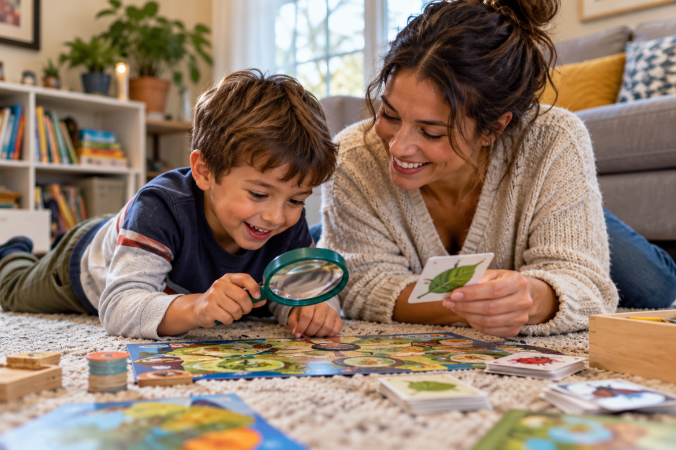
  • Play strategy-based games that build impulse control, thinking ahead and adapting strategies: Uno, Jenga, Chess, or Memory are good ones.
  • Protect sleep time like their success depends on it — because it does!

So, as parents or caregivers when we are looking to build our children’s success at school, we don’t always need to know how to help them with their Calculus homework to assist them in becoming more successful.

What we all can do is find ways of practicing those critical brain skills that open the doors to successful learning.

And I thought Uno was just a game that I never won!

Hitting the Sweet Spot – Criticism and Praise

In every classroom — at every grade level — a quiet tension exists between correction and encouragement. As educators, we find ourselves navigating the delicate balance between offering constructive criticism and celebrating effort.

Can well-meaning praise sometimes do more harm than good? Is that possible?

An article in Forbes magazine, “Criticism Is Good, But Praise Is Better,” reminds us that while feedback is essential, the tone and intent behind it can shape a student’s confidence and motivation. I recently wrote a blog post about Confirmation Bias (Why Students and Adults Struggle to Be Wrong — and How to Help, Dec 2025) where I outlined the vulnerability of students whose self-image is still developing and can be inadvertently and negatively influenced by both praise and criticism.

The way we speak to students can dramatically influence not just their academic outcomes, but their belief in themselves. Finding the balance — or sweet spot — for optimal personal growth is tricky.

When used well, praise is a powerful motivator. A teacher once told me how her classroom transformed when she shifted from pointing out mistakes to highlighting effort: “I started saying things like, ‘I noticed how you kept trying even when the problem was hard.’” The result? Students became more engaged, more curious, and more willing to take risks.

But, not all praise is created equal.

When praise becomes automatic or overly general — “Great job!” or “You’re so smart!” — it can lead to Confirmation Bias, where students begin to seek validation rather than growth. They may cling to familiar strategies, even when those strategies aren’t working, simply because they’ve been praised for them in the past.

A student praised repeatedly for their vivid vocabulary might resist feedback about their sentence structure. Why change what’s already being celebrated? In these moments, praise can unintentionally close the door to deeper learning.

So, it’s important to recognize that giving praise runs the risk of actually stifling creativity and broader thinking.

That’s why the most effective praise is both specific and reflective. Effective praise acknowledges what’s working while gently inviting students to consider alternatives. For example: “I love how you used descriptive language here. What do you think would happen if you varied your sentence lengths to build suspense?” This kind of feedback affirms effort while encouraging exploration. It minimizes the risk of contributing to confirmation bias.

Parents can adopt this approach at home, too. Instead of saying, “You’re amazing at math,” try, “I noticed how you broke that problem into steps—that strategy really worked. What might you try next time if it gets trickier?” This not only builds confidence but also fosters a mindset of adaptability and growth.

Ultimately, the goal isn’t to either eliminate criticism or flood students with praise.

It’s to create a culture of thoughtful feedback — striking a balance where students feel safe to take risks, reflect on their choices, and revise their thinking. When we do this, we’re not just helping them succeed in school. We’re helping them become resilient, reflective learners for life.

So, praise wisely, correct with care, and you’ll keep the door open for personal growth.

Digital Leadership in K–12: Harnessing AI Without Losing Humanity

I still remember the thrill of moving from my trusty Brother electric typewriter to a remote computer terminal. I’d type out a paper at the University of Calgary, send it across campus to the printer station, and — assuming someone was there — I’d find my term paper neatly placed in a pigeonhole. No more whiteout, no more misaligned type. Just a professional looking report. It felt like magic.

Captain Kirk at the Starship’s Computer

Back then, the future was something we saw on TV. In the 1960s and 70s, Star Trek imagined a world where Captain Kirk could simply ask the ship’s computer a question and get an instant, logical response. That seemed centuries away.

But here we are today where artificial intelligence (AI) can answer your questions in real time, scanning vast databases for what it thinks is the best response. Not perfect — just reasonable. Still, it feels like magic.

I’ve written before about AI’s potential in school (The Sky is Falling … AGAIN, Jan 2023) — personalized instruction, student assessment, lesson generation. But it’s not just about teaching and learning. AI has the ability of transforming the business side of K–12 as well — student registration, policy or procedure inquiries, workflow improvements, even analyzing population growth trends. And that’s only scratching the surface.

THE VISION: Harness AI to improve student learning and success while limiting misuse and risk.

AI is everywhere — digital assistants, search engines, social media, online shopping, fraud prevention, gaming, medical diagnosis. The list goes on. But with this leap forward come real concerns: deepfakes, bias, privacy violations, job security, hacking, intensive energy consumption and more.

So, where do schools fit in? How do we balance possibilities with risks?

To begin, we keep asking the important questions:

  • What bias and accuracy does this AI tool bring?
  • Does it make sense to use it in a particular place? Will it improve student access to their learning?
  • How do we protect data privacy?
  • How do we preserve critical thinking skills?
  • How do we keep human connections at the center?

Actively exploring its possibilities is not only important, it’s also non-negotiable. As AI’s capabilities evolve, waiting until ‘things have settled’ is like waiting for the grass to stop growing before you mow it. You might as well start now, because it’s only going to get more difficult the longer you wait.

We’ve done this before. Think calculators. Think the internet. Both were disruptive. Both raised concerns. Yet we found ways to integrate them without losing the essence of learning. Calculators didn’t erase math skills. The internet didn’t destroy originality — plagiarism existed long before Google. We adapted. We can do it again.

My point here is not to minimize the real and potential risks of AI — they are there — but, instead to chart a path of exploration that can maximize its advantages while minimizing the risks. Yes, there are bigger challenges with AI than with the calculator and the internet — primarily because AI is evolving so quickly, and we don’t know what next month will look like, let alone next year. Yet, it’s potential for improved access to curriculum, personalizing the educational experiences, building student success, and enhancing the business side of education is unparalleled.

Why AI Matters for Kids’ Brains

Can technology actually help our kids’ brains grow? Yes, if we use it wisely.

Here’s the good news — AI can be a powerful ally for brain development. AI can personalize learning, offering challenges that match a child’s pace and providing instant feedback. Research shows this supports executive functions like working memory and cognitive flexibility. When used wisely, AI can help teachers focus on what they do best — inspiring curiosity and connection.

But here’s the catch — too much automation can strip away the human connection that fuels motivation. Brains aren’t just processors — they’re social organs. Kids need eye contact, laughter, and human connection. Schools are where this happens. When I ask students what’s working for them, they never say “the technology”. They talk about teachers, administrators, counselors, educational assistants—the people who connect with them on a daily basis.

Human connections build confidence, understanding and competence — technology is a tool, not the teacher.

Of course, every shiny tool has a shadow. Over-reliance on AI can lead to passive learning, reduced creativity, and data privacy concerns. AI algorithms aren’t perfect — they carry biases that affect their output, so teaching about these potential biases help us manage how and where we use the tool.

So, what’s the solution? Balance.

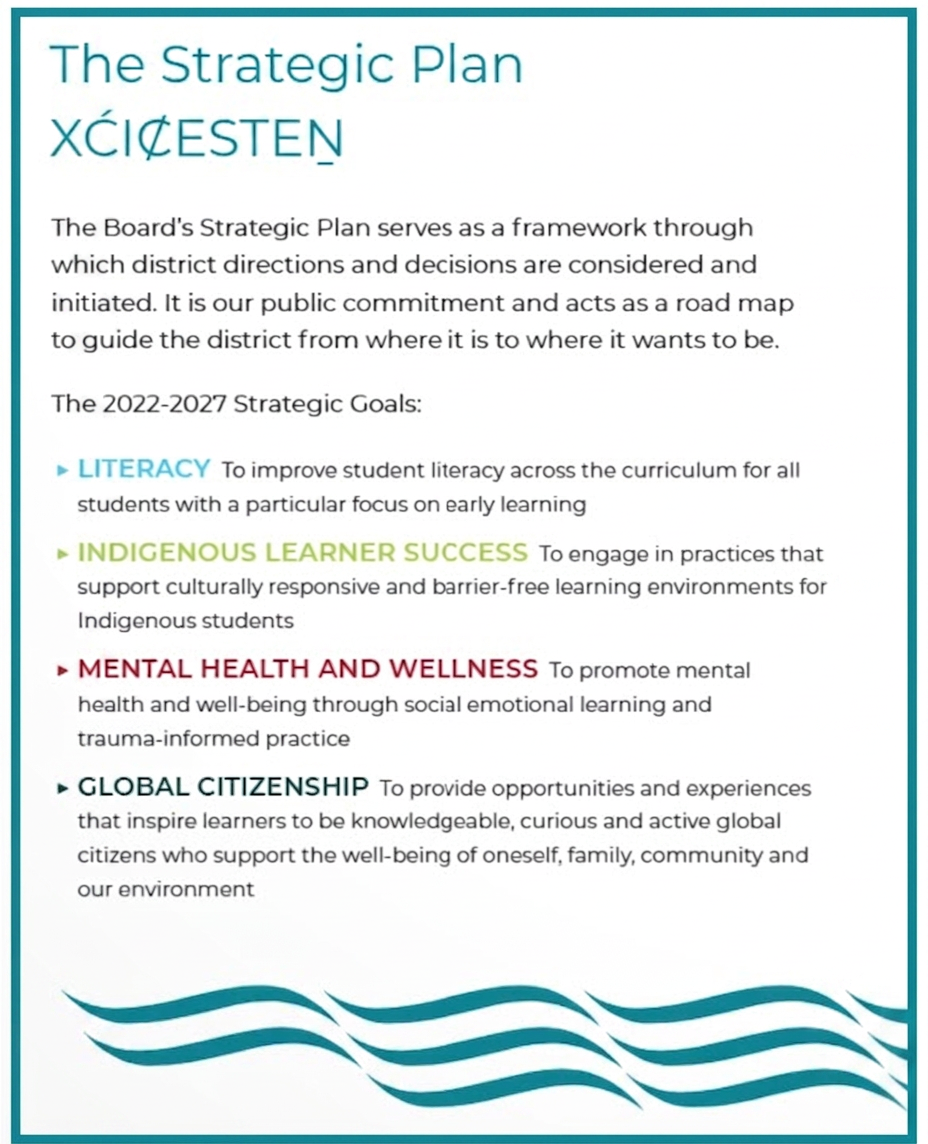
Digital leadership means creating guardrails so AI enhances — not replaces — the human elements of learning. Think of AI as the sous-chef, not the head chef. It can chop the veggies, but the teacher still crafts the recipe. In Saanich, as part of our own guardrails we developed an Artificial Intelligence Framework built on four themes:

  • Teaching & Learning
  • Inclusion and Accessible Learning
  • Ethical Use
  • Privacy, Security & Safety

What Can Parents Do?

You don’t need a tech degree to stay involved. Encourage screen-time boundaries. Promote activities that build executive function outside of the tech world — things like puzzles, outdoor play, and storytelling. The best brain development happens when kids combine digital learning with real-world experiences — with trusted adults being the glue and the motivation.

AI in education isn’t a villain or a superhero — it’s a tool. In the hands of thoughtful leaders and engaged parents, it can help kids develop the cognitive skills they need for a complex world. But, we’re also not losing sight of the human heartbeat in learning.

Because, no algorithm can replace the magic of a teacher who believes in your child — or the joy of a parent cheering them on.

(This post was written by the author. AI created some of the images as well as reviewing the post for flow and grammar.)