Consumers to Creators

We’ve all been to school.  Look at me — I’ve never left.  So, we all think we’ve got a pretty good idea of what’s supposed to happen there.

Let’s review …

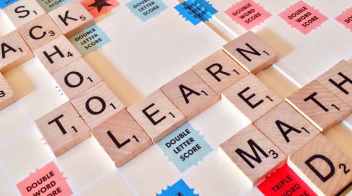
One of the historical goals of schools has been to provide students with enough knowledge of ‘stuff’ and ‘skills’ to be productive citizens once they graduate.  To achieve this, students have historically been ‘consumers’ of information or content — they learned from the ‘knowledge keepers’ — our teachers.  As curriculum evolved, new courses were created, teachers learned the content and then imparted this knowledge.  Sort of the ‘sage on the stage’ kind of process.  It was pretty much a unidirectional mode of information transfer.
pexels-photo-256417.jpeg

In today’s world, there is still a need for a content expert who knows ‘stuff’ — a teacher who’s been to post-secondary and become a subject area or learning specialist.  This need won’t change anytime soon — teachers continue to be an absolutely critical component of student success.

But times are changing …

In today’s world the role of the teacher IS fundamentally changing.  Content is ubiquitous — we can find it just about anywhere on the internet in a virtual space accessible by a few clicks on your smartphone or a verbal question to SIRI.  Content no longer resides solely in the domain of the teacher.  In fact, students are often far better content masters than their teachers on any number of topics.

So, what does this mean for the traditional learning paradigm?

Continue reading

The Escape Room

I participated in my first Escape Room a little while ago at the suggestion of my son and daughter.   Our family made the reservation, piled into the car and headed off to an afternoon of problem solving.  I was intrigued by the concept of solving a mystery using team work and a series of successive clues to make our way out of a locked room.

escaping dog

We Use What We Know To Solve a Problem

Of course when we got there, my son immediately told the clerk that we wanted the most difficult room available.  “Nice”, I thought.  “I’ll be locked in here for hours! So much for my self-esteem.”

There were 5 of us who squeezed into a room no larger than 10′ x 8′ … and I have to say … it was a ton of fun.  Yes, we were stumped occasionally, and when we finally made it out of the room, we found ourselves in another locked room with even more clues to steer us to our eventual escape.  We actually needed a bit of help from the Escape Room employee on two occasions, but our shared knowledge and problem-solving skills enabled us to eventually find our way out.

Continue reading

Are We Becoming Innovation Complacent?

“It’s OK to be where you are right now.  It’s just not OK to stay there.”

This phrase resides above my desk.  I heard it a long time ago at a table of educators — it really resonated with me.  I have had it as a daily reminder every day since then.  It guides me in how I observe, what I ponder and why I plan:

  • We’re all at a particular place in our learning — and, it’s acceptable to be there for the moment.  After all, we all have a different history and experiences in life.
  • However, it’s not OK to remain in that spot — we need to keep moving forward.  Continual improvement needs to be our goal —  our reason for thinking, learning and improving in our practice.

We Need to Grow, Learn and — in some cases — even Reinvent Ourselves

For public education I believe this to be particularly true.  To remain a relevant societal enterprise we need to be constantly evolving — and that begins with the people who work in the system — every last one of us. Continue reading