We’ve all been to school. Look at me — I’ve never left. So, we all think we’ve got a pretty good idea of what’s supposed to happen there.
Let’s review …
One of the historical goals of schools has been to provide students with enough knowledge of ‘stuff’ and ‘skills’ to be productive citizens once they graduate. To achieve this, students have historically been ‘consumers’ of information or content — they learned from the ‘knowledge keepers’ — our teachers. As curriculum evolved, new courses were created, teachers learned the content and then imparted this knowledge. Sort of the ‘sage on the stage’ kind of process. It was pretty much a unidirectional mode of information transfer.
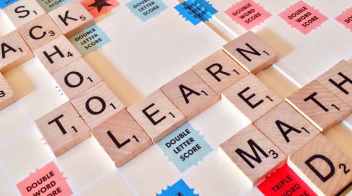
In today’s world, there is still a need for a content expert who knows ‘stuff’ — a teacher who’s been to post-secondary and become a subject area or learning specialist. This need won’t change anytime soon — teachers continue to be an absolutely critical component of student success.
But times are changing …
In today’s world the role of the teacher IS fundamentally changing. Content is ubiquitous — we can find it just about anywhere on the internet in a virtual space accessible by a few clicks on your smartphone or a verbal question to SIRI. Content no longer resides solely in the domain of the teacher. In fact, students are often far better content masters than their teachers on any number of topics.
So, what does this mean for the traditional learning paradigm?
Continue reading →


 As the story goes, Hungarian sculptor and professor Ernő Rubik invented the device to teach his students about the mechanics behind 3D movable parts. He soon discovered that he had a pretty cool toy on his hands and with that impetus, the Rubik’s Cube made it’s international debut at some European toy fairs in early 1980. With sales at over 350 million units to date it is widely assumed to be the world’s top selling puzzle game … ever!
 The Power of Why