Public Education – What A Journey!

When I look back over almost forty years in public education, what strikes me most is not simply what has changed … but why.

Education has steadily moved away from being a place where we simply impart content, toward a broader and more human-centered vision — one that recognizes learning as deeply connected to a person’s identity, well-being, and belonging. The story of education in BC is no longer just about mastering the core mandates of reading, writing, and arithmetic — it is about preparing young people for a complex, uncertain, and interconnected world that incorporates these important skills.

Public Education – A Place of Belonging

For much of the late twentieth century, schooling was measured by coverage — how much content could be delivered in 13 years and how efficiently it could be assessed. Rote memorization and standardized testing were the norm and were used to measure school success. Knowledge was something students received, often passively, and success was frequently defined by one-size-fits-all benchmarks.

Over time, however, we began asking better questions.

  • What does it mean to understand rather than memorize?
  • How does student learning lead to future readiness?

These shifts laid the foundation for today’s competency-based approach — one focused on meaningful application of content and knowledge rather than just the sheer volume of information being taught.

BC Curriculum – Know; Do; Understand

The reinvigorated BC curriculum represents this shift.

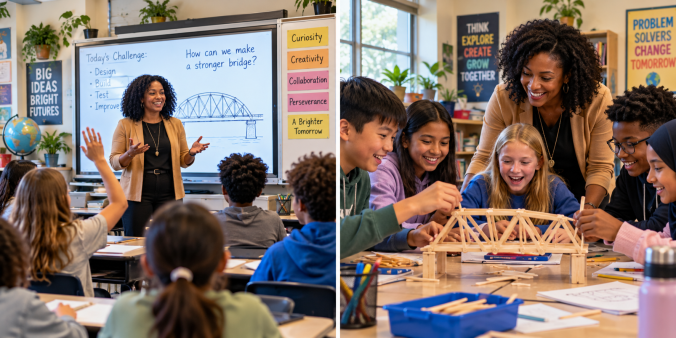
While content still matters — it is no longer the end goal. Instead, content serves as the vehicle through which students develop the capacities they need for life beyond school — things like critical and creative thinking, communication, collaboration, and personal and social responsibility. The curriculum’s emphasis on knowing, doing, and understanding reflects a recognition that education must prepare learners not just to recall information, but to navigate ambiguity, solve problems, and contribute thoughtfully to their communities.

Alongside this curricular shift has come a growing respect for student voice, choice, and personalized pathways.

There is now greater acknowledgment that learners arrive with different strengths, interests, cultures, and aspirations. Student-centered learning is not about lowering expectations — it is about raising relevance. When young people see themselves in their learning — and have agency in shaping it — they are far more likely to engage deeply and persist through the inevitable challenges that come along with it.

Perhaps one of the most profound changes over the past four decades has been the expansion of inclusion. There is greater awareness of diverse learning needs, disabilities, neurodiversity, cultural backgrounds, and systemic inequities. While the work is far from complete, the moral center of the system has shifted toward equity, dignity, and access — recognizing that fairness does not mean sameness.

Public Education is a Key Player in Building Understanding and Enacting Change

As part of this shift to greater inclusion, there has also been a powerful and necessary re-centering of Indigenous perspectives, reconciliation, and local context. Schools are moving away from a singular, colonial narrative toward a more honest and inclusive understanding of history, land, and relationships. This work challenges educators and students to think beyond a western, colonial narrative to one that honours the significant knowledge and history of local First Nations communities and other Indigenous groups.

Schools today also attend far more deliberately to mental health, well-being, and social-emotional learning than in the past — a nod to a greater sense of inclusion as well. We now understand that learning cannot be separated from how students feel, the relationships they experience, and the sense of safety they carry with them. Supporting the whole child is no longer seen as a distraction from academic learning, but as the foundation that makes it possible.

Technology, once a peripheral add-on, now sits at the heart of learning, communication, and administration. From digital literacy and online collaboration to data-informed decision-making, technology has reshaped how schools function and how students learn. Artificial Intelligence is the next thing in technology — a tool so powerful, it has the potential to reshape not only the learning side of what we do, but the business side of how we do it. Importantly, this technology shift has reinforced the need to maintain and focus on students’ critical thinking — not just how to use tools, but how to evaluate information, question sources, and engage responsibly in digital spaces. Technology is amplifying the why behind learning rather than replacing it.

Public education in BC has come a long way over the past four decades.

Its mandate has expanded, its values have deepened, and its purpose has become clearer. The enduring question — the real Power of Why — is not whether schools should focus on basics or broader skills, but how they can hold both in balance. In doing so, education remains what it was always meant to be — a promise to young people that they will be seen, supported, and prepared for the lives they are yet to imagine.

The Why of public education is stronger than it’s ever been — more relevant in a world that needs compassion, understanding and inclusion.

The Neuroscience of Nostalgia: Why Familiar Stories Feel So Good

I’m fascinated by the exploration of brain function and, specifically, how it relates to education and student success. Neuroscience continues to be a great source of information for building an even better education system.

Before I begin my post on The Neuroscience of Nostalgia, let’s begin with talking about one of my favourite TV shows – M*A*S*H. I’ve watched the series at least 10 times over — probably more.

Why do I watch the same episodes again and again and again?

My ongoing commitment to this 1970s wartime sitcom is not because I’m bored or because I’m too lazy to watch something new — I watch them because they’re familiar. I can predict what’s coming — even knowing many of the script lines. There are no surprise endings. No plot twists. Just dry humour, heartfelt moments, and a sense of comfort in knowing everyone on the TV screen.

And, as it turns out, there’s strong neuroscience behind the importance of this familiarity.

When we rewatch a familiar show, listen to a favourite song, or read a treasured bedtime story to our children, our brains breathe a sigh of relief. The amygdala — the part of the brain that scans for danger like a hypervigilant squirrel — gets to take a break. It recognizes the storyline, the characters, the music. There’s no threat. Just Corporal Radar O’Reilly trying to keep the M*A*S*H camp running smoothly. 

This is what neuroscientists call comfort-watching — something that reduces one’s cognitive load. Your prefrontal cortex — the part of your brain responsible for planning and decision-making gets to rest. When you comfort-watch (or comfort-listen or comfort-read) you already know what happens next. There’s no need to analyze, predict, or problem solve — you just relax and take it all in.

Science has shown that there is a fundamental need for our brains to find that ‘relax mode’ — to not worry about what might be coming next.

A 2012 study found that rewatching familiar shows helps people feel soothed, restored, and emotionally grounded. It’s not about entertainment—it’s about emotional safety. Another study showed that people turn to familiar media when they’re emotionally drained because it provides a sense of control and predictability.

So, how does comfort-watching, or comfort-listening or comfort-reading relate to the classroom? Think about why children insist on hearing the same story over and over again.

Why do Kindergarten students want to sing the same song every morning? It’s not because they lack imagination. It’s because their developing brains crave predictability. Neuroscience shows that repetition strengthens neural pathways, helping children process language, emotions, and cause-and-effect relationships.

Star Wars – My Movies of Choice

There were reports that during the 2020 pandemic that large numbers of people turned to their childhood TV shows and movies. When surrounded by the unknowns of the pandemic, people found themselves surfing to find series or movies that were familiar. When the world feels chaotic, our nervous system reaches for what’s known. Predictable stories act like a buffer between us and the unknown. They bring order to chaos.

And for our students — especially those navigating big emotions, new environments, or transitions — familiarity is a powerful form of regulation.

This is why school routines matter.

Morning circle time on the carpet for Kindergarten students, consistent classroom expectations, emotionally safe spaces where a dysregulated child can surround themselves with familiarity — and, yes, even Pizza Fridays — all help students feel grounded. When we create predictable environments, we’re not just managing behaviour — we’re supporting brain development.

Radar and Hawkeye from M*A*S*H

So, don’t despair when a child seeks familiarity. Think of it as their brain ‘taking a breath’ to become centered. Their brains are doing exactly what they’re wired to do — seek safety through familiarity.

And if you find yourself rewatching M*A*S*H, Friends or Star Wars after a long day, know that you’re not being lazy.

You’re self-regulating. Neuroscience says so.

Why Equity and Excellence Must Walk Hand in Hand: Lessons from Finland and British Columbia

In education, we often look outward to learn inward. For years, Finland has been a guiding light — its public education system admired globally for its innovation, student success, and deep commitment to equity. Researchers, policymakers, and educators have studied it closely, hoping to understand how a small Nordic country became an educational superpower.

But Finland is no longer alone in this spotlight.

British Columbia has quietly — and confidently — joined the ranks of the world’s most respected education systems. Our province has consistently performed at the top of international assessments, and in 2019, the OECD chose BC to host its Future of Education and Skills 2030 meeting — the first time this global gathering was held in North America. That moment wasn’t just symbolic. It was a recognition of the work we’ve done together: educators, families, and communities building a system that values both excellence and equity.

Yes, we’ve learned from Finland. But, we’ve also forged our own path.

One of Finland’s most influential voices, Professor Pasi Sahlberg, has long championed the idea that public education must be both excellent and equitable. Currently a professor of Educational Leadership at the University of Melbourne in Australia, Sahlberg has worn many hats — teacher, researcher, policy advisor — and through it all, he’s remained steadfast in his belief that education is a public good. He reminds us that schools are not just places of learning; they are pillars of democracy, equity, and opportunity.

His message is clear: we don’t have to choose between high achievement and fair access. We can — and must — pursue both.

Here in Saanich, we see this every day:

  • In classrooms where students are encouraged to think critically and creatively.
  • In schools where staff work tirelessly to ensure every learner feels seen, supported, and challenged.
  • Where we recognize that Indigenous students are not achieving to the same level as their non-indigenous peers and, as such, continuing to focus on this inequity.
  • In families and communities that partner with us to nurture not just academic success, but well-being, belonging, and purpose.

The work is not easy. But it is essential.

As we look ahead, let’s continue to ask ourselves these questions:

  • Are we creating spaces where all students can thrive?
  • How do we continue to value our educators and support staff as the professionals they are?
  • Are we building a system that reflects the diversity, complexity, and potential of every learner?

Equity and excellence are not opposing forces. They are twin pillars of a strong public education system. And when we commit to both, we create something powerful — not just for our students, but for our entire community.