Hitting the Sweet Spot – Criticism and Praise

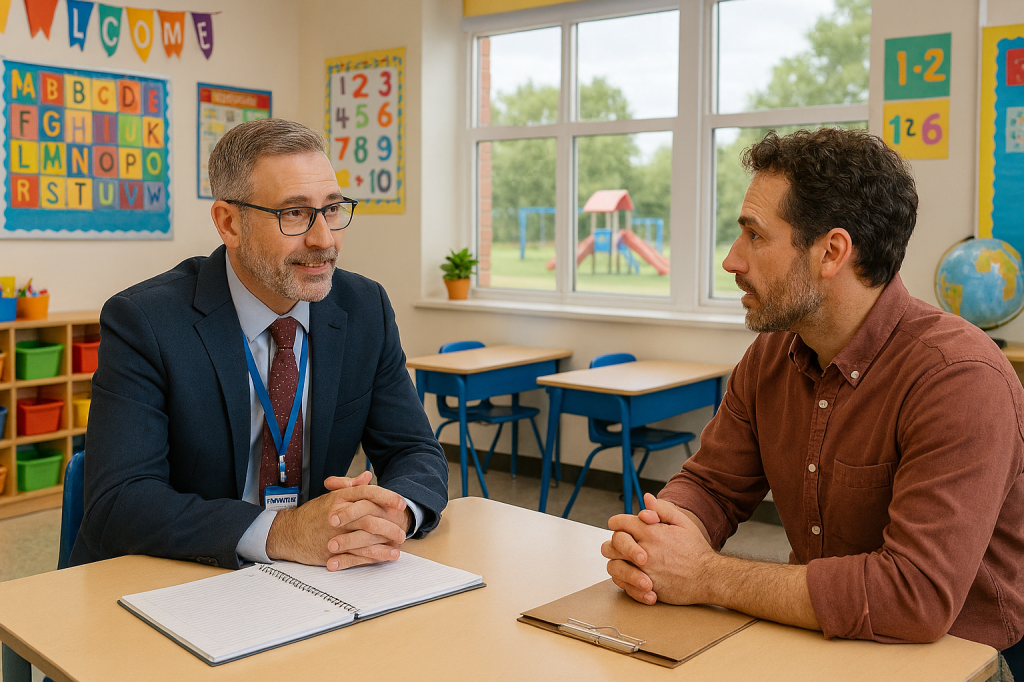
In every classroom — at every grade level — a quiet tension exists between correction and encouragement. As educators, we find ourselves navigating the delicate balance between offering constructive criticism and celebrating effort.

Can well-meaning praise sometimes do more harm than good? Is that possible?

An article in Forbes magazine, “Criticism Is Good, But Praise Is Better,” reminds us that while feedback is essential, the tone and intent behind it can shape a student’s confidence and motivation. I recently wrote a blog post about Confirmation Bias (Why Students and Adults Struggle to Be Wrong — and How to Help, Dec 2025) where I outlined the vulnerability of students whose self-image is still developing and can be inadvertently and negatively influenced by both praise and criticism.

The way we speak to students can dramatically influence not just their academic outcomes, but their belief in themselves. Finding the balance — or sweet spot — for optimal personal growth is tricky.

When used well, praise is a powerful motivator. A teacher once told me how her classroom transformed when she shifted from pointing out mistakes to highlighting effort: “I started saying things like, ‘I noticed how you kept trying even when the problem was hard.’” The result? Students became more engaged, more curious, and more willing to take risks.

But, not all praise is created equal.

When praise becomes automatic or overly general — “Great job!” or “You’re so smart!” — it can lead to Confirmation Bias, where students begin to seek validation rather than growth. They may cling to familiar strategies, even when those strategies aren’t working, simply because they’ve been praised for them in the past.

A student praised repeatedly for their vivid vocabulary might resist feedback about their sentence structure. Why change what’s already being celebrated? In these moments, praise can unintentionally close the door to deeper learning.

So, it’s important to recognize that giving praise runs the risk of actually stifling creativity and broader thinking.

That’s why the most effective praise is both specific and reflective. Effective praise acknowledges what’s working while gently inviting students to consider alternatives. For example: “I love how you used descriptive language here. What do you think would happen if you varied your sentence lengths to build suspense?” This kind of feedback affirms effort while encouraging exploration. It minimizes the risk of contributing to confirmation bias.

Parents can adopt this approach at home, too. Instead of saying, “You’re amazing at math,” try, “I noticed how you broke that problem into steps—that strategy really worked. What might you try next time if it gets trickier?” This not only builds confidence but also fosters a mindset of adaptability and growth.

Ultimately, the goal isn’t to either eliminate criticism or flood students with praise.

It’s to create a culture of thoughtful feedback — striking a balance where students feel safe to take risks, reflect on their choices, and revise their thinking. When we do this, we’re not just helping them succeed in school. We’re helping them become resilient, reflective learners for life.

So, praise wisely, correct with care, and you’ll keep the door open for personal growth.

The Power of Kindness Over Niceness

There is a constant tension in leadership. There are moments in every leader’s journey when we’re faced with a choice — Do we say the hard thing, or do we stay silent to keep the peace?

It’s tempting to choose what appears to be the ‘easier’ route. After all, we’re in the business of nurturing, supporting, and building community — ‘rocking the boat’ would appear to be the opposite of that. And, we all want to be viewed as nice.

But the truth is — being ‘nice‘ isn’t the same as being ‘kind‘.

Let me explain.

As leaders, we can confuse niceness with goodness. We all desire to be ‘good’, and to do that we can also think we just need to be ‘nice’ all the time. We avoid the difficult conversations because we don’t want to hurt feelings or be seen as harsh.

But niceness, when it avoids the truth, can erode the trust we need as an organization. Kindness, on the other hand, is rooted in respect which can build and strengthen trust. It’s the courage to speak honestly, even when it’s uncomfortable — because we care enough to want better for each other and for our organization.

Being a kind leader means holding people accountable with compassion. It means addressing the colleague who consistently misses deadlines, not to shame them, but to support their growth. It means naming the tension in a meeting, not to create conflict, but to clear the air and move forward with integrity. And, it may sometimes mean making a difficult decision.

Over my 37 years in public education, I’ve learned that the most honouring thing we can do for our staff is to be clear and consistent. Clarity is kindness. When we avoid the awkward conversation — the hard conversation — we leave people guessing. We create a culture of uncertainty, where assumptions fill the silence. But, when we speak with honesty and empathy, when we work to address the issues, we build a workplace where people feel seen, respected, and safe.

Speaking with honesty doesn’t mean we abandon warmth or empathy.

Quite the opposite. Kindness is deeply relational.

Kindness in Leadership: The practice of demonstrating empathy, compassion and consideration even when making difficult decisions. Kindness in leadership is not about being weak or compromising standards, but rather about balancing firmness with care, and understanding. 

Kindness is about showing up with humanity, even when the message is hard. It’s about saying, “I believe in you enough to have this conversation”.

In our schools, we talk about modeling the culture we want to see in our students. If we want them to grow into courageous, respectful and engaged citizens, we must show them what that looks like in adult relationships. This starts with us — leaders who are willing to be kind, not just nice — leaders who have the hard conversations because it’s not only the right thing to do, but also the kind and respectful thing to do.

So, the next time you hesitate before a tough conversation, ask yourself this question: ‘Am I avoiding this to be liked, or am I leading with kindness and respect?

Kindness isn’t always comfortable — but it’s always worth it. It’s always the correct path.

Building an organizational culture where truth and care walk hand-in-hand is what makes us stronger and on our desired trajectory — to grow and get better. It’s a leadership journey where we realize that feedback is a gift, not a threat — where we honour each other enough to be real.

Because in the end … kindness builds trust. And trust builds everything else.

The Day I Became “Sir”and Other Signs I’m Not 25 Anymore

I remember it clearly — the time someone first referred to me as ‘Sir’.

I was a first-year teacher — fresh from university — and could easily pass for Grade 11 or 12. When a student in my class addressed me with that formal little word, I was stunned. “Sir?” I thought. “That’s what you call someone’s dad — not me.”

Fast forward a couple of years to present day, and ‘Sir’ is now a regular part of my daily soundtrack — at the grocery store; on the sidewalk; even at my favourite coffee shop –though the baristas there now greet me with my name, which might be a sign I’m spending a bit too much time caffeinating.

Something to reflect on.

Even the man in the mirror every morning — who’s sporting a few more grey hairs than should be there — doesn’t have any answers either for the regular reference to ‘Sir’. He just stares back, amused, as if to say, “You’re not 25 anymore, Dave. Let it go.”

Now, before you leave this post because its looking like a vanity post (and maybe it is a little), please stick with me. Because, I want to talk about transitions, especially those affecting our students — those inevitable life shifts that sneak up on us, whether we’re ready or not.

Every one of us goes through them.

Some are joyful — marriage, kids, landing that first real job. Others are harder — illness, loss, unexpected detours. And in between, there are the subtle ones — the slow realization that you’ve changed, that your role in the world is evolving, that you’re no longer the ‘young one’ in the room.

Lately, I’ve been reflecting on my own life transitions — both personal and professional. Were they good? Did they lead to growth? Would I have done anything differently if I’d known what was coming? These questions don’t have easy answers, but they’re worth asking. Because transitions shape us. They challenge us. And they remind us that nothing stays the same forever.

Which brings me to our students. If we, as adults, find transitions tricky, how are we preparing young people for the ones they’ll face? Are we helping them build the resilience they’ll need when life throws them a curveball? Are we giving them the tools to navigate a world that’s changing faster than ever — where AI, climate change, social media and social upheaval are part of the daily news cycle?

The truth is, life in 2025 is complex. And while every generation has faced its own version of ‘hard‘, today’s challenges are uniquely unpredictable. That’s why education matters more than ever — not just for teaching facts, but for helping students develop the mindset to adapt, to persevere, and to thrive.

Education is that critical ‘people builder’ space where we have the privilege of providing the children and youth of our community with the abilities of thinking critically and creatively, being compassionate and welcoming of others, and engaging their curiosity to be life-long learners. We hold that power and responsibility.

As we head into another new school year, the importance of transitions continues in its importance for our students.

And for me?

I’m still in the game — loving what I do. Still passionate about public education. Still learning. Still growing. And yes, still secretly hoping someone will check my ID when I order a glass of wine — just once, for old time’s sake.

(This post was inspired by the author prompting AI on the idea of the importance of life transitions. The personal stories and anecdotes are real and written without AI.)