Why Equity and Excellence Must Walk Hand in Hand: Lessons from Finland and British Columbia

In education, we often look outward to learn inward. For years, Finland has been a guiding light — its public education system admired globally for its innovation, student success, and deep commitment to equity. Researchers, policymakers, and educators have studied it closely, hoping to understand how a small Nordic country became an educational superpower.

But Finland is no longer alone in this spotlight.

British Columbia has quietly — and confidently — joined the ranks of the world’s most respected education systems. Our province has consistently performed at the top of international assessments, and in 2019, the OECD chose BC to host its Future of Education and Skills 2030 meeting — the first time this global gathering was held in North America. That moment wasn’t just symbolic. It was a recognition of the work we’ve done together: educators, families, and communities building a system that values both excellence and equity.

Yes, we’ve learned from Finland. But, we’ve also forged our own path.

One of Finland’s most influential voices, Professor Pasi Sahlberg, has long championed the idea that public education must be both excellent and equitable. Currently a professor of Educational Leadership at the University of Melbourne in Australia, Sahlberg has worn many hats — teacher, researcher, policy advisor — and through it all, he’s remained steadfast in his belief that education is a public good. He reminds us that schools are not just places of learning; they are pillars of democracy, equity, and opportunity.

His message is clear: we don’t have to choose between high achievement and fair access. We can — and must — pursue both.

Here in Saanich, we see this every day:

  • In classrooms where students are encouraged to think critically and creatively.
  • In schools where staff work tirelessly to ensure every learner feels seen, supported, and challenged.
  • Where we recognize that Indigenous students are not achieving to the same level as their non-indigenous peers and, as such, continuing to focus on this inequity.
  • In families and communities that partner with us to nurture not just academic success, but well-being, belonging, and purpose.

The work is not easy. But it is essential.

As we look ahead, let’s continue to ask ourselves these questions:

  • Are we creating spaces where all students can thrive?
  • How do we continue to value our educators and support staff as the professionals they are?
  • Are we building a system that reflects the diversity, complexity, and potential of every learner?

Equity and excellence are not opposing forces. They are twin pillars of a strong public education system. And when we commit to both, we create something powerful — not just for our students, but for our entire community.

Hiring Our Leaders – What Matters Most

I’ve seen commentary that people who are wealthy must be great leaders. That is typically not my ‘go to’ as I’ve seen some wealthy people who aren’t the most honourable. Having lots of money doesn’t automatically translate into exceptional leadership. Instead, I look for leaders with exceptional personal values — things like compassion, transparency, consistency and honesty. This being said, there are people in this world who are both wealthy and of high moral character.

Warren Buffett is one of those people.

When he speaks and writes about his values, they transcend the boundaries of finance. The following is a great example:

When one talks about integrity, especially when hiring for leadership positions, it can sometimes be an afterthought for some organizations — and that is a huge mistake.

Integrity in our leaders is what builds trust, and trust is the cornerstone upon which successful organizations thrive. Integrity, intelligence and energy are a forceful combination that can help drive organizational success. However, without integrity, a leader who has both intelligence and energy can be dangerous and even destructive.

Leaders need to possess a strong ethical compass to ensure that their decisions and actions are guided by principles that foster respect and belief in their values.

I have talked about this importance of integrity before, when I discussed the critical importance of CHARACTER (Leadership, Character and Congruence – Oct 2023). Integrity and character are intertwined — they both represent that same intangible, and critical quality that helps build long-term organizational success.

The other two traits that Buffet discusses — intelligence and energy — are undoubtedly valuable in a leader. Intelligence allows for strategic thinking and problem-solving, while energy drives motivation and productivity. However, without integrity, these other two qualities lead to manipulation and dishonesty. A leader who lacks integrity often uses their intelligence to deceive and their high energy levels to pursue selfish goals, ultimately harming the organization and its people.

Buffett reminds us that leadership is not merely about achieving results, but about how those results are achieved. Leaders with integrity create an environment where employees feel valued and respected, leading to higher morale and productivity, and it fosters a culture of transparency and accountability essential for long-term success.

This creates a ripple effect, encouraging employees to act with their own honesty and responsibility.

Effective Leaders lead with Integrity

In today’s fast-paced environment, the temptation to prioritize short-term wins over long-term values can be tempting, yet disastrous. Organizations must look at future leaders beyond their resumes and job qualifications, to assess their character and values. This involves evaluating their past behavior, decision-making processes, and their commitment to ethical principles.

  • Do they resolve situations by holding true to the values they espouse?
  • Are they a person who handles difficulties with grace, dignity and accountability?
  • Are they honourable when no one is looking?

Leadership in education is about the long game. You build productive change by living true to one’s values. Your personal and consistent commitment to them is the game changer for positive results. Leaders who uphold this principle are better equipped to make decisions that benefit their organizations in the long run, even if it means sacrificing immediate rewards.

Furthermore, integrity in leadership is not just about avoiding unethical behavior; it is about actively promoting ethical practices. Leaders with integrity lead by example, demonstrating the importance of honesty, fairness, and respect in all aspects of their work.

So, while intelligence and energy are critically important, they must be grounded in a strong ethical foundation to be truly effective. When hiring leaders ensure that integrity comes first, second and third. Only then, will the leader’s intelligence and energy push your organization to greater heights.

(NOTE: This post was created with the assistance of AI on the Warren Buffet quote, however, there was significant input in the final product from the author’s own beliefs and content.)

The Critical Need For Gratitude

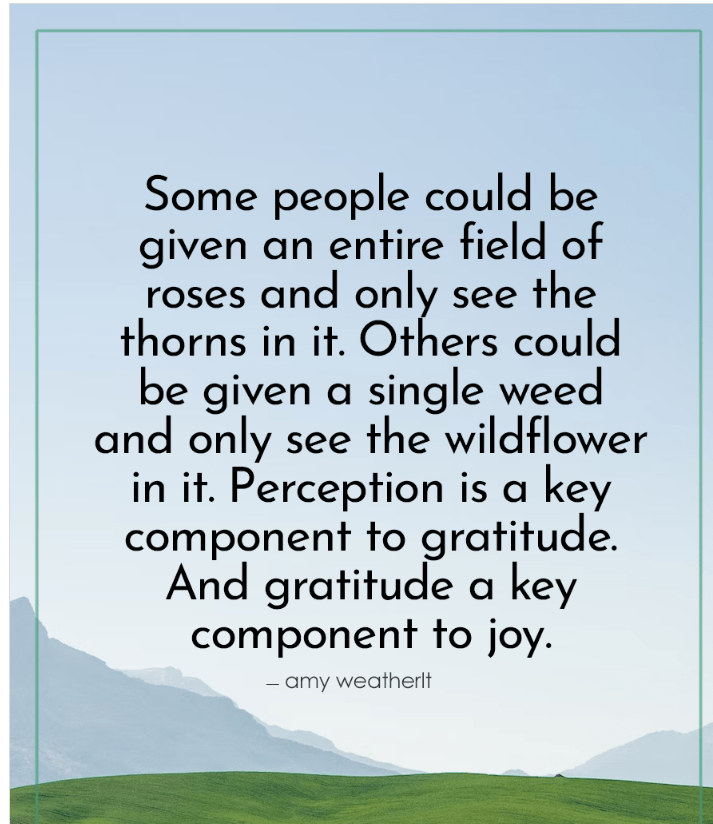
There’s too much anger and finger-pointing in our world — so much blaming of others — especially these days.

Some people and communities are definitely more fortunate than others — I have many things that others do not.

If we all took a bit more time to practice gratitude — for both the big and little things — I’m pretty sure our world would be a better place.

That’s all.