Disruptive Technology

An innovation that significantly alters the way that consumers or systems like K-12 education operate. Disruptive technologies sweep away the processes they replace because they have attributes that are significantly superior.

We live in a world where changes are the norm — and they are happening at a pace that is often mind-boggling.

Some changes are thrust upon us:

  • Inflation / Consumer Price Index changes
  • New Taxes
  • Daylight Savings Time
When a Pumpkin Spice Latte was all the rage

… while other changes may be optional:

  • EVs (Electric vehicles)
  • Seasonal coffee flavours at Starbucks (still have to try the pumpkin spice latte)
  • New slip-on shoes without shoelaces (these seem like a great new idea, but are they cool?)

When its technology we’re talking about, change typically occurs because the new tech is faster, more user friendly or perhaps even cheaper:

  • LIGHT BULBS … replaced candles
  • AUTOMOBILES … replaced the horse & buggy
  • CALCULATORS … replaced the slide rule
  • The INTERNET … replaced encyclopedias

In all of these cases the technology change was DISRUPTIVE — the new tech replacing, or disrupting, the existing technology. Transition to the new tech was slow and somewhat predictable over time.

Today, there is a new disruptive tech that is sweeping the planet — and it has been an overnight sensation. Hundreds of millions of users ‘signed on’ in just a couple of months. It has both captivated the world and at the same time created a bit of fear with its insurgence.

Welcome to ARTIFICIAL INTELLIGENCE.

(More on Page 2)
The Sky is Falling … AGAIN

Education is a place where we regularly hear fears about things impinging on our schools. This is particularly true when we talk about technology. Whenever a new technology approaches we sometimes hear negative reactions from the community. Technology is great until someone says it isn’t.

“The sky is falling. Save yourself!”

Let’s review some of the historical examples of technology fear:

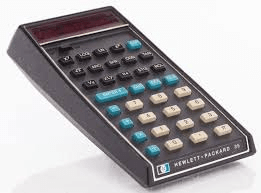
This Trendsetter from the 70s Changed Math Classrooms Forever
  • Calculators – when these new electronic devices became widely available and affordable in the mid 70s the fear was that they would make students illiterate in math.
  • Internet – this innovation provided more immediate access to information as compared to the antiquated Dewey Decimal System card catalogue in the library. It was going to create chaos in our classrooms with rampant plagiarism.
  • Online Learning – this new type of virtual instruction was going to completely negate classroom teachers and change education into simple, rote memorization.
  • Wolfram Alpha – Introduced in 2009, this new website allowed users to generate answers to mathematic problems by using the site’s formulas. It would make learning math irrelevant and allow for rampant cheating.

None of those catastrophes happened — more on this in a bit.

(More on Page 2)

Be My Eyes – A Really Cool App

I’m occasionally asked why I’m so passionate about technology in schools.  It can admittedly cost a lot of money and for what real advantage?Ed Tech

It’s a GREAT question.  And it’s one that I’ve given a fair amount of thought to over the years — even more so in the recent past.  You can read some of my thinking in some recent blogs that I’ve written on the topic:

For me the question isn’t really ABOUT the technology — it’s about the effect that technology can have on the learning or lives of those it impacts.

Continue reading