The Year from 20,000 Feet

20,000 feet above the earth provides a good overview of the terrain — not a ton of detail, but you get a great perspective of the landscape. I use this analogy when I share an outline of a topic. I suppose I should be saying 6,000 meters but old habits die hard.

Sidney, BC – My Home Town

Which brings me to this final post of the 2022-2023 school year …

This was our year to get back into the ‘groove of school‘ and focus less on the pandemic and its interruptions.

In this post, I am going to share a few ‘20,000 foot’ comments about our ‘groove’. Most are celebratory in nature — but, not all of them.

(More on Page 2)

The Glory Years: Ages 2-7

When one talks about The Glory Years we typically refer to those times in our past that are remembered for great success or happiness. Maybe it’s your 20s, 30s or even your 50s. Most people probably don’t think it’s when they were a toddler.

However, the years from 2-7 are when our brains are best primed for learning — so, from a learning perspective these are indeed The Glory Years.

The evidence on this remarkable learning time is clear (e.g. Edutopia: Why Ages 2-7 Matter So Much for Brain Development. Neural connections, and hence learning, increase when we are young, but not in a uniform progression.

The first critical period of rapid brain development happens around ages 2 to 7 — the second and final one happens during adolescence. Between the ages of 2 and 7 the nerve connections between brain cells (called synapses) actually double in number, accelerating learning. After age 7 the brain begins to ‘trim’ its neural connections to focus on the areas most useful for daily life. So, it’s during the early years that learning things like languages, interrelationships between concepts, and the mastering of physical tasks like running or riding a bike happen with greater ease.

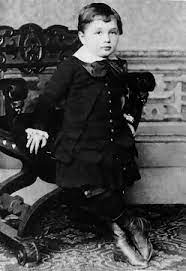
Albert Einstein

If you are familiar with Albert Einstein, the extraordinary scientist from the early part of the 20th century, you may also know that his childhood was anything but normal. He struggled to even speak as a young child, and had some significant issues in school including being expelled. But, as difficult as his early years were, he was incredibly successful in some areas such as playing the violin, studying magnetism, and being able to think in pictures rather than words. His well known adult accomplishments can likely be tied to his diverse childhood experiences.

(More on Page 2)

Painting a Picture with Numbers

Numbers are a great place to start a conversation. While they never tell the whole story, they do offer a launching point.

Take a look at the ones above.

They represent some statistics on an important topic — a part of a story from across our province and country. And while they don’t offer a complete narrative about the topic they do help to paint a compelling picture — a picture that reaffirms for me why schools need to be an important place of understanding and acceptance.

The topic I want to talk about today is also a polarizing one in our communities. My experience has shown that few people are without a strong opinion on the topic.

Let’s begin today’s discussion by looking at the two largest numbers …

1,000,000

  • The approximate number of persons in Canada who identified as lesbian, gay, bisexual, trans, queer or questioning (2021)

75,000

  • The approximate number of persons in Canada who identified as trans or non-binary (2018)

(More on Page 2)