Why Equity and Excellence Must Walk Hand in Hand: Lessons from Finland and British Columbia

In education, we often look outward to learn inward. For years, Finland has been a guiding light — its public education system admired globally for its innovation, student success, and deep commitment to equity. Researchers, policymakers, and educators have studied it closely, hoping to understand how a small Nordic country became an educational superpower.

But Finland is no longer alone in this spotlight.

British Columbia has quietly — and confidently — joined the ranks of the world’s most respected education systems. Our province has consistently performed at the top of international assessments, and in 2019, the OECD chose BC to host its Future of Education and Skills 2030 meeting — the first time this global gathering was held in North America. That moment wasn’t just symbolic. It was a recognition of the work we’ve done together: educators, families, and communities building a system that values both excellence and equity.

Yes, we’ve learned from Finland. But, we’ve also forged our own path.

One of Finland’s most influential voices, Professor Pasi Sahlberg, has long championed the idea that public education must be both excellent and equitable. Currently a professor of Educational Leadership at the University of Melbourne in Australia, Sahlberg has worn many hats — teacher, researcher, policy advisor — and through it all, he’s remained steadfast in his belief that education is a public good. He reminds us that schools are not just places of learning; they are pillars of democracy, equity, and opportunity.

His message is clear: we don’t have to choose between high achievement and fair access. We can — and must — pursue both.

Here in Saanich, we see this every day:

  • In classrooms where students are encouraged to think critically and creatively.
  • In schools where staff work tirelessly to ensure every learner feels seen, supported, and challenged.
  • Where we recognize that Indigenous students are not achieving to the same level as their non-indigenous peers and, as such, continuing to focus on this inequity.
  • In families and communities that partner with us to nurture not just academic success, but well-being, belonging, and purpose.

The work is not easy. But it is essential.

As we look ahead, let’s continue to ask ourselves these questions:

  • Are we creating spaces where all students can thrive?
  • How do we continue to value our educators and support staff as the professionals they are?
  • Are we building a system that reflects the diversity, complexity, and potential of every learner?

Equity and excellence are not opposing forces. They are twin pillars of a strong public education system. And when we commit to both, we create something powerful — not just for our students, but for our entire community.

The Day I Became “Sir”and Other Signs I’m Not 25 Anymore

I remember it clearly — the time someone first referred to me as ‘Sir’.

I was a first-year teacher — fresh from university — and could easily pass for Grade 11 or 12. When a student in my class addressed me with that formal little word, I was stunned. “Sir?” I thought. “That’s what you call someone’s dad — not me.”

Fast forward a couple of years to present day, and ‘Sir’ is now a regular part of my daily soundtrack — at the grocery store; on the sidewalk; even at my favourite coffee shop –though the baristas there now greet me with my name, which might be a sign I’m spending a bit too much time caffeinating.

Something to reflect on.

Even the man in the mirror every morning — who’s sporting a few more grey hairs than should be there — doesn’t have any answers either for the regular reference to ‘Sir’. He just stares back, amused, as if to say, “You’re not 25 anymore, Dave. Let it go.”

Now, before you leave this post because its looking like a vanity post (and maybe it is a little), please stick with me. Because, I want to talk about transitions, especially those affecting our students — those inevitable life shifts that sneak up on us, whether we’re ready or not.

Every one of us goes through them.

Some are joyful — marriage, kids, landing that first real job. Others are harder — illness, loss, unexpected detours. And in between, there are the subtle ones — the slow realization that you’ve changed, that your role in the world is evolving, that you’re no longer the ‘young one’ in the room.

Lately, I’ve been reflecting on my own life transitions — both personal and professional. Were they good? Did they lead to growth? Would I have done anything differently if I’d known what was coming? These questions don’t have easy answers, but they’re worth asking. Because transitions shape us. They challenge us. And they remind us that nothing stays the same forever.

Which brings me to our students. If we, as adults, find transitions tricky, how are we preparing young people for the ones they’ll face? Are we helping them build the resilience they’ll need when life throws them a curveball? Are we giving them the tools to navigate a world that’s changing faster than ever — where AI, climate change, social media and social upheaval are part of the daily news cycle?

The truth is, life in 2025 is complex. And while every generation has faced its own version of ‘hard‘, today’s challenges are uniquely unpredictable. That’s why education matters more than ever — not just for teaching facts, but for helping students develop the mindset to adapt, to persevere, and to thrive.

Education is that critical ‘people builder’ space where we have the privilege of providing the children and youth of our community with the abilities of thinking critically and creatively, being compassionate and welcoming of others, and engaging their curiosity to be life-long learners. We hold that power and responsibility.

As we head into another new school year, the importance of transitions continues in its importance for our students.

And for me?

I’m still in the game — loving what I do. Still passionate about public education. Still learning. Still growing. And yes, still secretly hoping someone will check my ID when I order a glass of wine — just once, for old time’s sake.

(This post was inspired by the author prompting AI on the idea of the importance of life transitions. The personal stories and anecdotes are real and written without AI.)

The Real Ones Recognize the Journey

People who’ve done the work exude a kind of quiet power. They don’t need to shout about it. You may not even notice it, but it’s there.

It’s subtle, but if you look closely, it becomes obvious:

Real Ones Recognize Greta Thunberg’s Courage
  • recognizing the efforts of others who are beginning their journey;
  • not offering criticism when others trip along their way;
  • not tearing others down but building them up.

This quiet power comes from experience. From deep inside one’s being.

They know the kind of courage it takes to try something new. To begin. To keep going when it gets ugly. When the failures seem to outnumber the successes. When the inevitable roadblocks stop others.

They know what it feels like to be criticized. They are the real ones.

Real ones don’t criticize. They recognize.

The Courage to Begin

Starting something new is one of the most vulnerable things a person can do. Whether it’s launching a new initiative like writing your first blog, stepping into a new role, rewriting the rulebook, or experimenting with a new tool — the beginning is always the hardest part. It’s where one’s doubt is the loudest and the support from others is often its quietest.

But those who’ve been there — those who’ve travelled a similar path to you — they see you. They know the courage it takes just to begin. Behind every success story is a mountain of unseen effort. Early mornings. Late nights. Repetition. Sacrifice.

Real ones understand that discipline isn’t glamorous—it’s gritty, it’s lonely and it’s necessary. And because they’ve lived it, they don’t mock your hustle.

They respect it.

  • The athlete respects the new gym attendee for the effort it takes to be awkward and unknowing in front of others.
  • The experienced master teacher honours the rookie who is trying new strategies.
  • The system leader cultivates a culture of emotional safety for new leaders allowing them the space to take risks.

To risk is to believe in something that doesn’t yet exist. It’s to bet on yourself when no one else will. Those who’ve taken real risks—who’ve put their time, money, and heart on the line—don’t belittle others for doing the same. They speak the language of the courageous.

Take the Risk to be Better

There’s nothing more raw than creating something from nothing. Sharing your ideas, your voice — it’s an act of vulnerability. True artists, makers, dreamers and doers know how exposed you feel when you put your work into the world — when you put yourself on the line. That’s why they applaud your courage.

It’s why you don’t see the athlete mocking the novice gym rat, nor the master teacher belittling the first year professional. These newcomers to the adventure are starting out and taking risks to be better — and that’s worth recognizing.

The Echo Chamber of the Uninspired

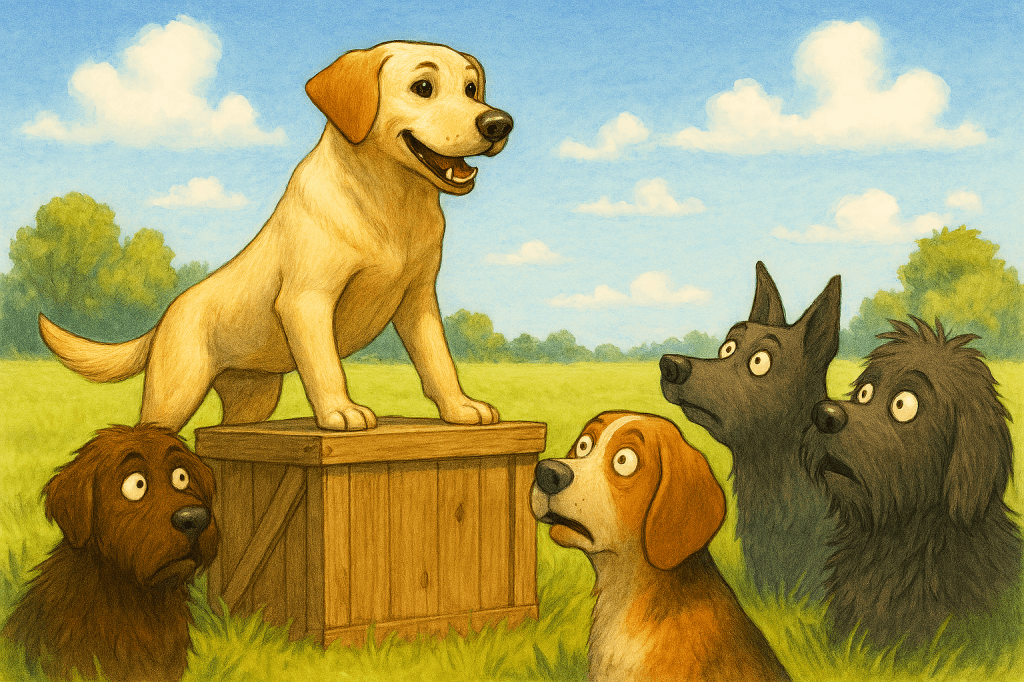
The loudest critics are often the ones doing the least. They haven’t risked. They haven’t built. They haven’t dared. Instead, they mock what they don’t understand. But their noise is just that—noise. It’s not a reflection of your worth. It’s a reflection of their fear.

You’ll know you’re on the right path when the quiet nods start showing up. The athlete who sees your grind. The leader who respects your ambition. The mentor who sees your growth. Real ones don’t need to say much. Their recognition is subtle, but it’s real — and it’s earned.

Protecting Your Energy

Listen to Your ‘Why’ and Risk to be Better

Not every opinion deserves your attention. Learn to discern between critique and criticism. Protect your energy like it’s your most valuable asset — because it is. Stay rooted in your purpose and let your “why” be louder than their “what ifs.”

Growth doesn’t happen in isolation. Surround yourself with people who challenge you, support you, and believe in you. The right community doesn’t just cheer you on—they hold you accountable to your potential. They remind you who you are when you forget.

Keep Building You

So keep going. Keep building. Keep growing. The world needs more people who are willing to try, to risk, to create. Don’t let the critics dim your drive. Let the real ones remind you that you’re not alone.

Let your superpower be your perseverance.

You’re just getting started.

(This post was inspired by the author prompting AI on the idea of someone being acknowledged by those who have travelled a similar path.)