Fear & Racism – Intertwined

People resist because they think they’re losing something. In reality, they’re making room. Room for better opportunities, room for growth, and room for clarity. You can’t build a stronger future if you refuse to demolish the outdated past.

Jay Alderton

This quote adds to the notion that change is hard because we don’t know what lies ahead and inserts the idea that resistance to change can also be because we fear losing something we cherish — something we value like control or our place in community.

The fear of losing is really about the fear of being ‘less’.

Building a brighter future for ourselves, and especially others requires being able to let go of the things that put roadblocks in our path to being better.

Racism is one of those roadblocks.

Some people have never been able to truly let go of racism because of the of fear losing control over our place in community — that our ‘slice of the societal pie’ will somehow become less if we treat others like ourselves. So, we take opportunity to marginalize others to give us the false belief that we are better and more important.

Treating others with dignity and respect doesn’t diminish our own place or relevance. Respect doesn’t have a capacity limit.

Dave Eberwein

Being Anti-Racist Means Being Active Against Racism

Racism has been a familiar topic of mine in The Power of Why:

While these posts were back in 2022, I haven’t stopped thinking about the topic, as racism is still alive and well in our community — and in our schools.

As I watch the news, I find it incredibly disappointing to see the increasing frequency of intolerance and bigotry towards others — whether it’s directed at a particular culture, religion, gender identity, language, sexual orientation, financial status, country of birth or skin colour — and I’ve probably left out a few descriptors — the spewed hatred and stereotyping that is found on social media and even from some political leaders can be disheartening.

Racism: Prejudice, discrimination, or antagonism directed against someone of a different race based on the belief that one’s own race is superior.

But, you may be sitting and thinking: “I’m not racist. This doesn’t apply to me.” Well, it does.

I don’t think I’ve ever met a person who believes they are racist — or, at least, anyone who claims to not have a ‘good reason’ to justify their bigotry. Believing one is not a racist is not the same as being anti-racist. And that’s an important distinction. If we are ever going to bring racism to its knees, especially in this time of social media antagonism, we all need to be ACTIVE in our anti-racism. We need to be visible in our disdain for intolerance, stereotyping, and bigotry.

It’s not OK to:

  • Be silent in the presence of racism
  • Let someone else take on the challenge of standing up for what’s right
  • Be inconsistent with the values of respect, acceptance and love for one another

Here are some key identifiers of racism:

  1. Stereotyping: Making generalized and often inaccurate assumptions about a group of people based on their race.
  2. Discrimination: Treating people unfairly or unjustly because of their race.
  3. Microaggressions: Subtle, often unintentional, comments or actions that can be hurtful or offensive to people of marginalized groups.
  4. Hate Speech: Using derogatory or offensive language aimed at a particular race.
  5. Systemic Racism: Institutional policies and practices that disproportionately affect certain racial groups.
  6. Cultural Appropriation: Adopting elements of a marginalized culture without permission or understanding, often in a way that reinforces stereotypes.
  7. Racial Profiling: Suspecting or targeting someone based on their race rather than their behavior.
  8. Exclusion: Deliberately leaving out or ignoring people because of their race.
  9. Colourism: Discrimination based on skin color, often within the same racial or ethnic group.
  10. Implicit Bias: Unconscious attitudes or stereotypes that affect our understanding, actions, and decisions.
We Can Do This – We Really Can

If you are aware of what racism looks like you can challenge it when you see it, hear it or read it. Be active in your opposition to it.

Individually, we make a difference. Together, we make a movement.

Bring racism to its knees.

(With special thanks to Star Wars and the quote from Jedi-master Yoda)

The Teenage Brain: A New Perspective

The teenage years have always been a big adventure — a time of seemingly boundless energy and enthusiasm. There has also been a tendency to sometimes label the teenager as impulsive and reckless — risk-takers who lack the decision-making abilities of adults.

The Wonderfully Complex and Morphing Brain of a Teenager

This characterization is misleading as recent neuroscience research is flipping this narrative on its head.

In an article by Zara Abrams, “What neuroscience tells us about the teenage brain” (2022), it turns out that the teenage brain is not just a bundle of chaos heading towards risky behaviour, but a powerhouse of neural potential and adaptability.

Here are some recent findings …

One of the most fascinating aspects of the teenage brain is its heightened sensitivity to rewards. This trait is driven by increased neural activity in an area known as the ventral striatum, a part of the brain that is involved in decision making, motor control, emotion, habit formation, and reward. This area has long been linked to risky behaviors like substance use, however, in the right environment this same sensitivity can lead to positive outcomes, such as increased motivation and social engagement. Not surprisingly, when teens are exposed to positive environments, their resulting actions tend to point in directions that can lead to some pretty amazing things.

There is building, brain-based evidence to support this.

Here are three brief descriptions of some amazing youth and the impacts they made in their teens:

  1. Autumn Peltier
    • At just 13 years of age, Canadian Indigenous rights activist Autumn Peltier addressed the United Nations General Assembly, urging them to recognize the importance of water protection. In 2019 and at the young age of 15, Autumn Peltier was named the chief water commissioner for the Anishinabek Nation, a group representing 40 First Nations across Ontario.
  2. Malala Yousafzai
    • As a child, Malala Yousafzai went to her dad’s school in Pakistan to be one of the few girls to get an education. One day as she was on her way to school, she was shot by a gunman simply because she was a student. Surviving this horrific event, Malala has become a passionate, global advocate for women’s educational rights.
  3. Greta Thunberg
    • In 2019, this Swedish teen was named ‘Person of the Year’ by Time Magazine in recognition of her work as a climate change activist: “We can’t just continue living as if there was no tomorrow, because there is a tomorrow.”
Autumn Peltier

Today, researchers are using sophisticated methods to study the teenage brain including conducting longitudinal studies. Instead of just comparing different age groups, researchers are following the same individuals over time. This approach is providing an even clearer picture of how the teenage brain develops and changes during adolescence.

The teenage brain is more malleable than we had thought.

This malleability or neuroplasticity means that teens are particularly adept at learning and adapting to new situations — all while their brains are undergoing a significant re-wiring — where their neural network is reducing grey matter (the cell bodies and connections between nerves) while increasing white matter (the insulated neural highways that speed information within the brain and throughout the body).

Malala Yousafzai

Teens are living their complex lives while their brains are making neural changes affecting their thinking, reasoning and actions. And … these changes are not uniform. This variability makes adolescence a unique and critical period, where it can lead to both positive and negative teen behavior.

This is where parents and educators play a pivotal role.

We cannot easily change certain environmental conditions like socio-economic status or even where we live, but we CAN influence an environmental condition that is likely even more important — our relationships with teens.

Greta Thunberg

And because of this, parents and educators play a crucial role in shaping the teenage brain. Positive reinforcement and supportive relationships can steer teens towards healthier behaviors. We can’t always control teen life stressors, but we can model how we react to them and also how we support teens. Understanding this developing science behind teenager brain development can only help influential adults such as parents and educators provide the best possible guidance for youth.

Despite these advances in research, there’s still much to learn about the teenage brain — an incredible, morphing marvel of nature.

So, the next time you see a teenager remember – their brain is not just a work in progress, but a potential masterpiece in the making in which we can all play a role.

Putting a Wrap on 2023-2024

Wrapping Up The Year

I look forward to this time of year because of the events that celebrate our time together and personal milestones. I also become reflective on some of the other events that have made a difference. For my year-end post I’ve organized a short list of things that have made us better. Each of these has personally resonated with me as a significant step forward in our district. I hope that you enjoy them and that they might also resonate with you.

My 2023-24 list of noteworthy events:

  • Year #2 of our Strategic Plan
  • Revitalized School Plans
  • A Commitment to a Better Future
  • Stelly’s Indigenous Cultural Room
  • 84 New Childcare Spaces
  • A Disruptive Technology

Year #2 of our Strategic Plan

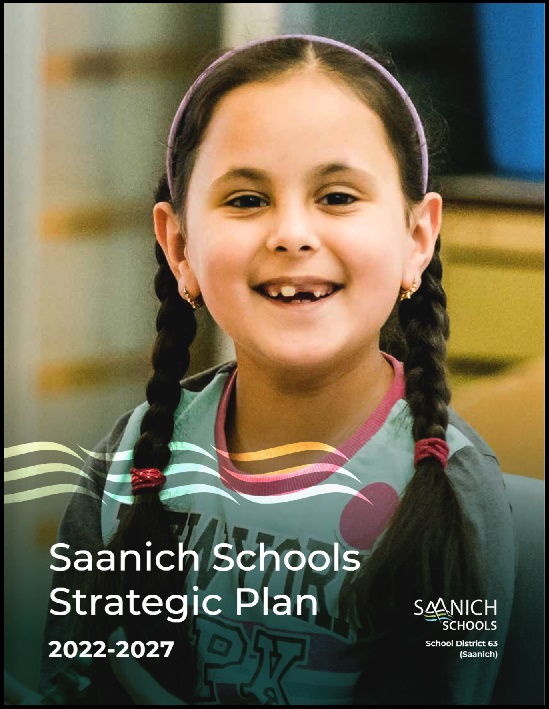
We are concluding Year #2 of our five-year strategic plan and we’ve learned a lot. With a crisp focus on 4 key areas (Literacy, Indigenous Learner Success, Mental Health & Wellness, Global Citizenship) we continue to use the Plan to steer priorities, conversations and actions:

  • Meeting agendas, professional development opportunities, presentations to the Board, School Plans, Professional Growth Plans, budget priorities — they are all being shaped by Strategic Plan 2022-2027.

It is exciting to see alignment between so many facets within our district — areas such as Facilities (e.g. Stelly’s Cultural Room), our learning agenda (e.g. Literacy, Indigenous Learner Success, Mental Health & Wellness) as well as budget and staffing priorities — all laser focused on the goal of improving student success.

(More on Page 2)