The First Lesson is the Most Important One

Before we teach content, we teach belonging — about the importance of children seeing themselves reflected in relationships, culture and words in our schools. Every September when students arrive — some for the first time, some returning for their 13th year — we ask ourselves a question:

Do students feel like they belong?

The research is clear — when students experience belonging — engagement rises, absenteeism falls, and achievement nudges ahead. Studies show that while a school district can help shape the overall sense of community, it is the adults who have daily contact with students that make them feel like they belong. And it is mostly teachers who provide those personal conditions necessary for the positive feelings of belonging at school.

Teachers make it all work.

It Begins in Kindergarten

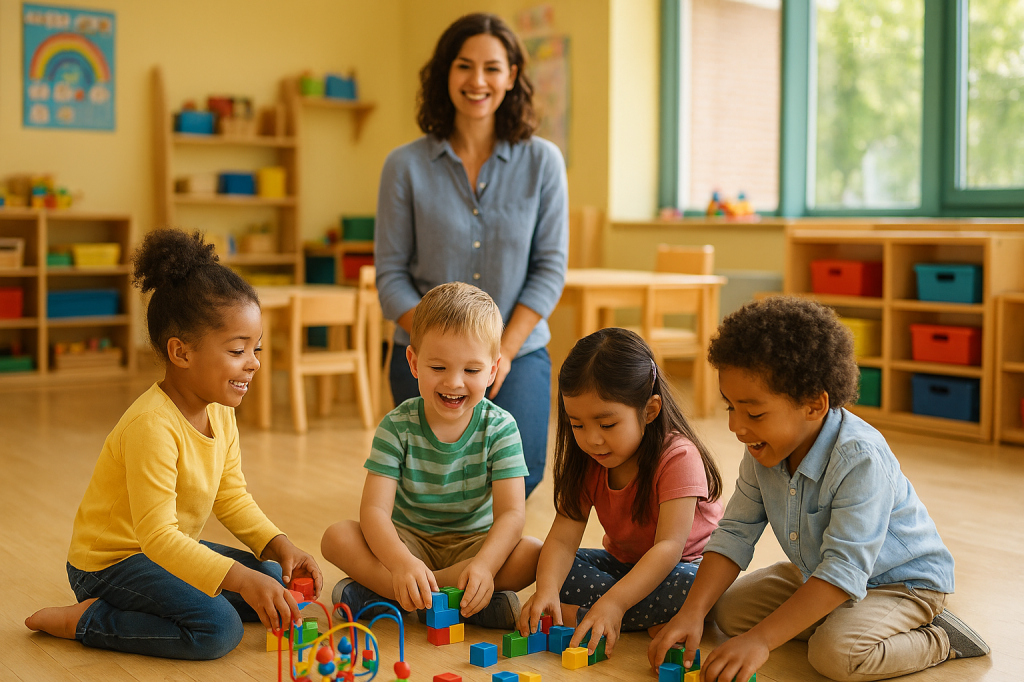
Kindergarten — that place where the magic begins. One of the early lessons for our newest students is also one of the most important — and our newest students learn the lesson through their play:

How do we interact with others? How do we learn to accept our differences and celebrate our uniqueness? How do we see our worth and value?

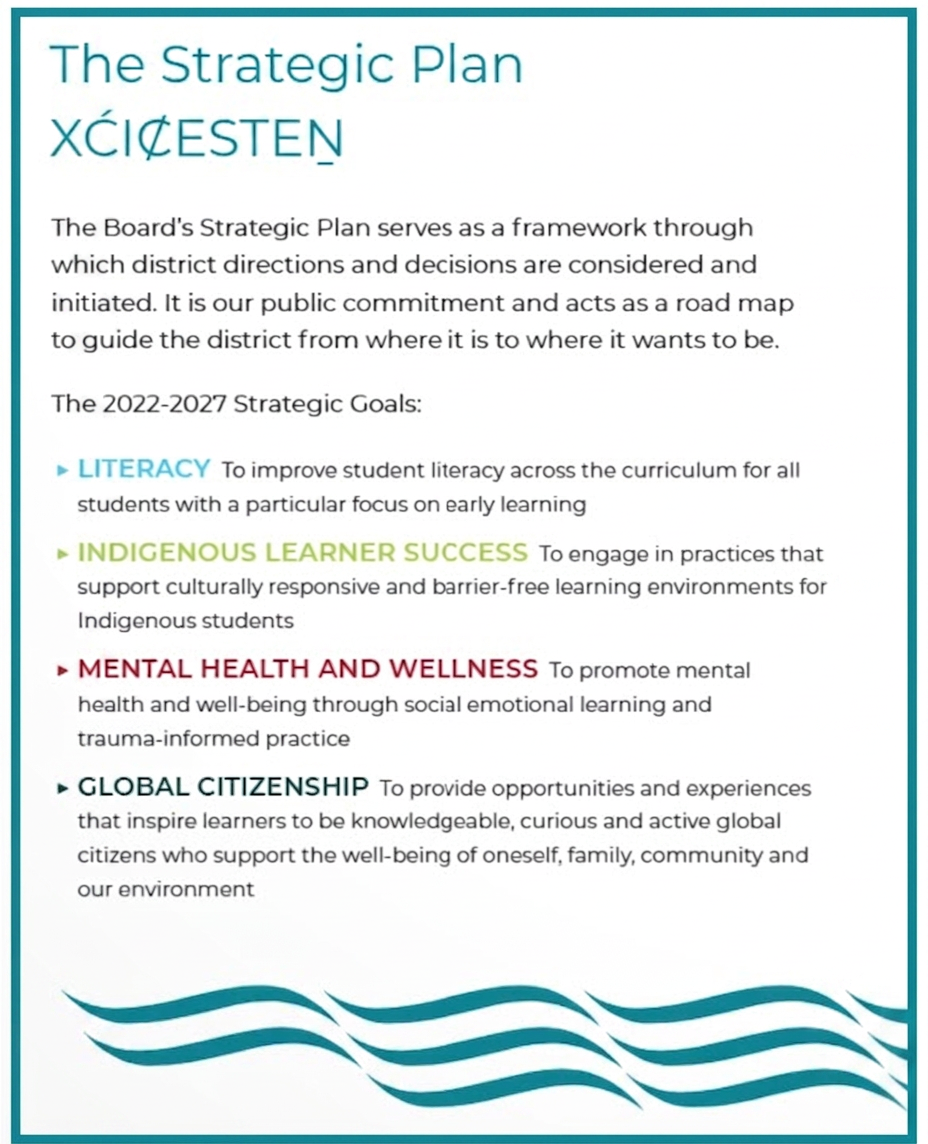
It begins by finding ways to honour all people — including those who have been here on this land for thousands of years. For me as Superintendent, the work we do on understanding and incorporating Indigenous ways of knowing is paramount to the mission we have in public education. The local W̱SÁNEĆ First Nation community has a fabulously rich culture, language and traditions that helps our district to ground our work — from Indigenizing the curriculum, building cultural competencies in our staff, introducing all K-students to the local language, and most importantly, building understanding, belonging and trust on a daily basis.

The Land, The History, The Ways of Being

In Saanich, teaching about belonging often begins with teaching about place — about the ancestral territory of the W̱SÁNEĆ people — stewards of these lands and waters since time immemorial. We are fortunate to have a strong, respectful and collaborative working relationship with the local First Nation which builds a broad community understanding about the history and culture of those who have been here for thousands of years. We are helping to reinvigorate the local and unique SENĆOŦEN language — from district‑wide Kindergarten lessons to programs at a number of our schools. School‑based Indigenous Education teachers support cultural and academic learning, and this past year, community partners celebrated a new, locally developed, district course on W̱SÁNEĆ culture and history — born from student voice and designed with significant contributions from local elders and knowledge keepers.

We also learn through story on the land — using local W̱SÁNEĆ stories and place‑based learning to strengthen oral language and connection. The Indigenous Education page on our district website is filled with links to a wide variety of items including local art that can be loaned, learning resource kits, online virtual resources and a host of other items that provide a rich fabric of opportunities to truly embed Indigenous ways of knowing and being into classroom lessons. The monthly Indigenous Education bulletin highlights new and timely resources for teachers at all levels and subject areas in our system.

Celebrating the History and Contributions of Indigenous Peoples Across Canada

Belonging Isn’t a Program

Belonging isn’t a program or a class — it’s a practice. When we know names, notice strengths, honour identities, and communicate clearly, students show up with courage, engagement and excitement.

And, when we recognize the people who have been here for thousands of years, we help build a community that is respectful and inclusive.

We build belonging.

Happy National Indigenous History Month everyone!

Public Education – What A Journey!

When I look back over almost forty years in public education, what strikes me most is not simply what has changed … but why.

Education has steadily moved away from being a place where we simply impart content, toward a broader and more human-centered vision — one that recognizes learning as deeply connected to a person’s identity, well-being, and belonging. The story of education in BC is no longer just about mastering the core mandates of reading, writing, and arithmetic — it is about preparing young people for a complex, uncertain, and interconnected world that incorporates these important skills.

Public Education – A Place of Belonging

For much of the late twentieth century, schooling was measured by coverage — how much content could be delivered in 13 years and how efficiently it could be assessed. Rote memorization and standardized testing were the norm and were used to measure school success. Knowledge was something students received, often passively, and success was frequently defined by one-size-fits-all benchmarks.

Over time, however, we began asking better questions.

  • What does it mean to understand rather than memorize?
  • How does student learning lead to future readiness?

These shifts laid the foundation for today’s competency-based approach — one focused on meaningful application of content and knowledge rather than just the sheer volume of information being taught.

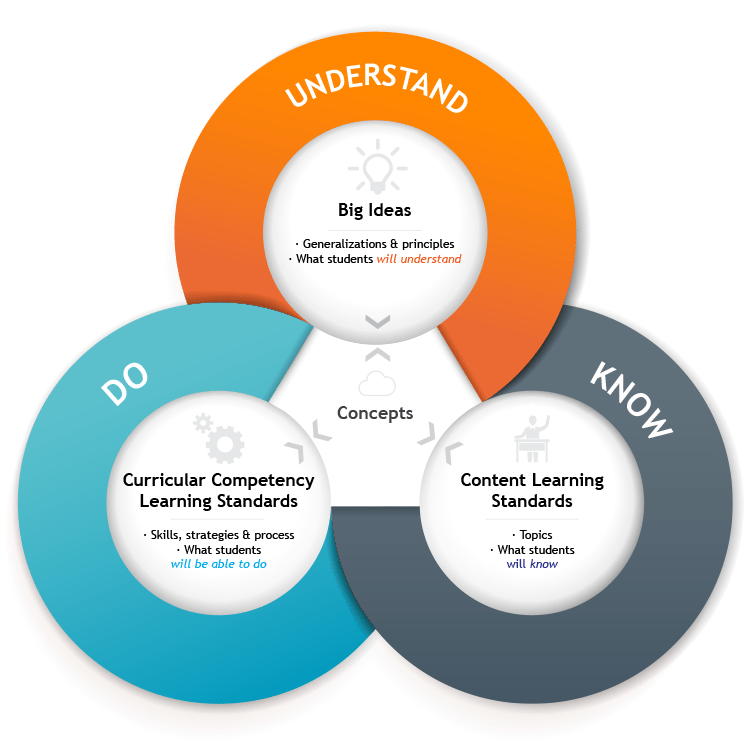
BC Curriculum – Know; Do; Understand

The reinvigorated BC curriculum represents this shift.

While content still matters — it is no longer the end goal. Instead, content serves as the vehicle through which students develop the capacities they need for life beyond school — things like critical and creative thinking, communication, collaboration, and personal and social responsibility. The curriculum’s emphasis on knowing, doing, and understanding reflects a recognition that education must prepare learners not just to recall information, but to navigate ambiguity, solve problems, and contribute thoughtfully to their communities.

Alongside this curricular shift has come a growing respect for student voice, choice, and personalized pathways.

There is now greater acknowledgment that learners arrive with different strengths, interests, cultures, and aspirations. Student-centered learning is not about lowering expectations — it is about raising relevance. When young people see themselves in their learning — and have agency in shaping it — they are far more likely to engage deeply and persist through the inevitable challenges that come along with it.

Perhaps one of the most profound changes over the past four decades has been the expansion of inclusion. There is greater awareness of diverse learning needs, disabilities, neurodiversity, cultural backgrounds, and systemic inequities. While the work is far from complete, the moral center of the system has shifted toward equity, dignity, and access — recognizing that fairness does not mean sameness.

Public Education is a Key Player in Building Understanding and Enacting Change

As part of this shift to greater inclusion, there has also been a powerful and necessary re-centering of Indigenous perspectives, reconciliation, and local context. Schools are moving away from a singular, colonial narrative toward a more honest and inclusive understanding of history, land, and relationships. This work challenges educators and students to think beyond a western, colonial narrative to one that honours the significant knowledge and history of local First Nations communities and other Indigenous groups.

Schools today also attend far more deliberately to mental health, well-being, and social-emotional learning than in the past — a nod to a greater sense of inclusion as well. We now understand that learning cannot be separated from how students feel, the relationships they experience, and the sense of safety they carry with them. Supporting the whole child is no longer seen as a distraction from academic learning, but as the foundation that makes it possible.

Technology, once a peripheral add-on, now sits at the heart of learning, communication, and administration. From digital literacy and online collaboration to data-informed decision-making, technology has reshaped how schools function and how students learn. Artificial Intelligence is the next thing in technology — a tool so powerful, it has the potential to reshape not only the learning side of what we do, but the business side of how we do it. Importantly, this technology shift has reinforced the need to maintain and focus on students’ critical thinking — not just how to use tools, but how to evaluate information, question sources, and engage responsibly in digital spaces. Technology is amplifying the why behind learning rather than replacing it.

Public education in BC has come a long way over the past four decades.

Its mandate has expanded, its values have deepened, and its purpose has become clearer. The enduring question — the real Power of Why — is not whether schools should focus on basics or broader skills, but how they can hold both in balance. In doing so, education remains what it was always meant to be — a promise to young people that they will be seen, supported, and prepared for the lives they are yet to imagine.

The Why of public education is stronger than it’s ever been — more relevant in a world that needs compassion, understanding and inclusion.

Fear & Racism – Intertwined

People resist because they think they’re losing something. In reality, they’re making room. Room for better opportunities, room for growth, and room for clarity. You can’t build a stronger future if you refuse to demolish the outdated past.

Jay Alderton

This quote adds to the notion that change is hard because we don’t know what lies ahead and inserts the idea that resistance to change can also be because we fear losing something we cherish — something we value like control or our place in community.

The fear of losing is really about the fear of being ‘less’.

Building a brighter future for ourselves, and especially others requires being able to let go of the things that put roadblocks in our path to being better.

Racism is one of those roadblocks.

Some people have never been able to truly let go of racism because of the of fear losing control over our place in community — that our ‘slice of the societal pie’ will somehow become less if we treat others like ourselves. So, we take opportunity to marginalize others to give us the false belief that we are better and more important.

Treating others with dignity and respect doesn’t diminish our own place or relevance. Respect doesn’t have a capacity limit.

Dave Eberwein

Being Anti-Racist Means Being Active Against Racism

Racism has been a familiar topic of mine in The Power of Why:

While these posts were back in 2022, I haven’t stopped thinking about the topic, as racism is still alive and well in our community — and in our schools.

As I watch the news, I find it incredibly disappointing to see the increasing frequency of intolerance and bigotry towards others — whether it’s directed at a particular culture, religion, gender identity, language, sexual orientation, financial status, country of birth or skin colour — and I’ve probably left out a few descriptors — the spewed hatred and stereotyping that is found on social media and even from some political leaders can be disheartening.

Racism: Prejudice, discrimination, or antagonism directed against someone of a different race based on the belief that one’s own race is superior.

But, you may be sitting and thinking: “I’m not racist. This doesn’t apply to me.” Well, it does.

I don’t think I’ve ever met a person who believes they are racist — or, at least, anyone who claims to not have a ‘good reason’ to justify their bigotry. Believing one is not a racist is not the same as being anti-racist. And that’s an important distinction. If we are ever going to bring racism to its knees, especially in this time of social media antagonism, we all need to be ACTIVE in our anti-racism. We need to be visible in our disdain for intolerance, stereotyping, and bigotry.

It’s not OK to:

  • Be silent in the presence of racism
  • Let someone else take on the challenge of standing up for what’s right
  • Be inconsistent with the values of respect, acceptance and love for one another

Here are some key identifiers of racism:

  1. Stereotyping: Making generalized and often inaccurate assumptions about a group of people based on their race.
  2. Discrimination: Treating people unfairly or unjustly because of their race.
  3. Microaggressions: Subtle, often unintentional, comments or actions that can be hurtful or offensive to people of marginalized groups.
  4. Hate Speech: Using derogatory or offensive language aimed at a particular race.
  5. Systemic Racism: Institutional policies and practices that disproportionately affect certain racial groups.
  6. Cultural Appropriation: Adopting elements of a marginalized culture without permission or understanding, often in a way that reinforces stereotypes.
  7. Racial Profiling: Suspecting or targeting someone based on their race rather than their behavior.
  8. Exclusion: Deliberately leaving out or ignoring people because of their race.
  9. Colourism: Discrimination based on skin color, often within the same racial or ethnic group.
  10. Implicit Bias: Unconscious attitudes or stereotypes that affect our understanding, actions, and decisions.
We Can Do This – We Really Can

If you are aware of what racism looks like you can challenge it when you see it, hear it or read it. Be active in your opposition to it.

Individually, we make a difference. Together, we make a movement.

Bring racism to its knees.

(With special thanks to Star Wars and the quote from Jedi-master Yoda)