Public Education – What A Journey!

When I look back over almost forty years in public education, what strikes me most is not simply what has changed … but why.

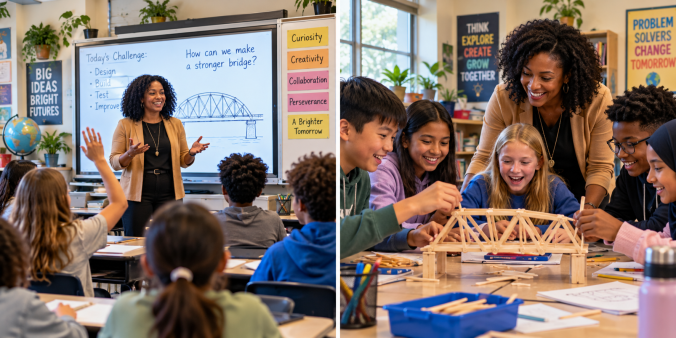
Education has steadily moved away from being a place where we simply impart content, toward a broader and more human-centered vision — one that recognizes learning as deeply connected to a person’s identity, well-being, and belonging. The story of education in BC is no longer just about mastering the core mandates of reading, writing, and arithmetic — it is about preparing young people for a complex, uncertain, and interconnected world that incorporates these important skills.

Public Education – A Place of Belonging

For much of the late twentieth century, schooling was measured by coverage — how much content could be delivered in 13 years and how efficiently it could be assessed. Rote memorization and standardized testing were the norm and were used to measure school success. Knowledge was something students received, often passively, and success was frequently defined by one-size-fits-all benchmarks.

Over time, however, we began asking better questions.

  • What does it mean to understand rather than memorize?
  • How does student learning lead to future readiness?

These shifts laid the foundation for today’s competency-based approach — one focused on meaningful application of content and knowledge rather than just the sheer volume of information being taught.

BC Curriculum – Know; Do; Understand

The reinvigorated BC curriculum represents this shift.

While content still matters — it is no longer the end goal. Instead, content serves as the vehicle through which students develop the capacities they need for life beyond school — things like critical and creative thinking, communication, collaboration, and personal and social responsibility. The curriculum’s emphasis on knowing, doing, and understanding reflects a recognition that education must prepare learners not just to recall information, but to navigate ambiguity, solve problems, and contribute thoughtfully to their communities.

Alongside this curricular shift has come a growing respect for student voice, choice, and personalized pathways.

There is now greater acknowledgment that learners arrive with different strengths, interests, cultures, and aspirations. Student-centered learning is not about lowering expectations — it is about raising relevance. When young people see themselves in their learning — and have agency in shaping it — they are far more likely to engage deeply and persist through the inevitable challenges that come along with it.

Perhaps one of the most profound changes over the past four decades has been the expansion of inclusion. There is greater awareness of diverse learning needs, disabilities, neurodiversity, cultural backgrounds, and systemic inequities. While the work is far from complete, the moral center of the system has shifted toward equity, dignity, and access — recognizing that fairness does not mean sameness.

Public Education is a Key Player in Building Understanding and Enacting Change

As part of this shift to greater inclusion, there has also been a powerful and necessary re-centering of Indigenous perspectives, reconciliation, and local context. Schools are moving away from a singular, colonial narrative toward a more honest and inclusive understanding of history, land, and relationships. This work challenges educators and students to think beyond a western, colonial narrative to one that honours the significant knowledge and history of local First Nations communities and other Indigenous groups.

Schools today also attend far more deliberately to mental health, well-being, and social-emotional learning than in the past — a nod to a greater sense of inclusion as well. We now understand that learning cannot be separated from how students feel, the relationships they experience, and the sense of safety they carry with them. Supporting the whole child is no longer seen as a distraction from academic learning, but as the foundation that makes it possible.

Technology, once a peripheral add-on, now sits at the heart of learning, communication, and administration. From digital literacy and online collaboration to data-informed decision-making, technology has reshaped how schools function and how students learn. Artificial Intelligence is the next thing in technology — a tool so powerful, it has the potential to reshape not only the learning side of what we do, but the business side of how we do it. Importantly, this technology shift has reinforced the need to maintain and focus on students’ critical thinking — not just how to use tools, but how to evaluate information, question sources, and engage responsibly in digital spaces. Technology is amplifying the why behind learning rather than replacing it.

Public education in BC has come a long way over the past four decades.

Its mandate has expanded, its values have deepened, and its purpose has become clearer. The enduring question — the real Power of Why — is not whether schools should focus on basics or broader skills, but how they can hold both in balance. In doing so, education remains what it was always meant to be — a promise to young people that they will be seen, supported, and prepared for the lives they are yet to imagine.

The Why of public education is stronger than it’s ever been — more relevant in a world that needs compassion, understanding and inclusion.

Organization Success Means Leading with Emotional Intelligence

I’ve blogged about the importance of nostalgia before (The Neuroscience of Nostalgia: Why Familiar Stories Feel So Good) — how it can have a calming influence on our brain and help with self-regulation.

But can it also spur innovation?

We have all likely walked into a space and been hit with a smell that instantly transported us back to our childhood. Maybe it was fresh-cut grass, or the scent of crayons, or perhaps the smell of freshly baked cookies from grandma’s house.

Nostalgia is powerful because it connects us to something deeply human — our emotions.

And emotions are the secret ingredient for both successful leadership and innovation.

Why Emotions Matter

We live in a world obsessed with efficiency, data, and speed. But leadership isn’t just about metrics and efficiency — it’s about meaning — a deeper connection to what’s around you and its influence on you.

Emotional Intelligence (EI) is what allows us to create meaning. EI is the ability to understand and manage our own emotions while recognizing and influencing the emotions of others.

Think about the last time you felt truly heard by a leader. Chances are it wasn’t because they had the best spreadsheet or meeting agenda. It was because they connected with you on a human level.

That’s EI.

The Neuroscience Behind Nostalgia

Neuroscience tells us that revisiting positive memories activates reward pathways in our brain. It makes us feel safe, valued, and open to new ideas. In other words, nostalgia can be a powerful launchpad for innovation. When leaders tap into that emotional connection — through stories or shared experiences — they create trust. And trust is the necessary foundation for risk-taking and creativity.

How Leaders Can Harness EI

Sharing your own Journey Builds Connections

So, how do you lead with emotional intelligence in a way that is genuine and transparent?

  1. Tell Stories That Matter – Share moments that shaped you. Vulnerability builds connection. It’s OK to tell the stories of your mistakes — that your errors can lead to future success.
  2. Model Reflection – Share your learning journey with the people in your care. By modelling your journey of ‘ups and downs’ you model the uneven growth path that we all travel.

As a leader, the most important thing in your toolbox is understanding that your purpose is to support the people in your organization — it’s not decision making or getting to a set endpoint.

By leading with Emotional Intelligence, you provide the necessary trust to build relationships. Relationships build shared opportunities. Opportunities build growth. Organizational success is not achieved by having more rules and regulations. Success depends in large part on the people whom you lead — and to do that means connecting with them beyond the statistics.

When people feel emotionally safe, they take risks. They speak up. They challenge the status quo. That’s where innovation lives — not in fear of making a mistake, but in trust.

Emotional intelligence isn’t something soft that we should ignore — it’s critical and it’s strategic.

It makes THE difference in organizational success!

Digital Leadership in K–12: Harnessing AI Without Losing Humanity

I still remember the thrill of moving from my trusty Brother electric typewriter to a remote computer terminal. I’d type out a paper at the University of Calgary, send it across campus to the printer station, and — assuming someone was there — I’d find my term paper neatly placed in a pigeonhole. No more whiteout, no more misaligned type. Just a professional looking report. It felt like magic.

Captain Kirk at the Starship’s Computer

Back then, the future was something we saw on TV. In the 1960s and 70s, Star Trek imagined a world where Captain Kirk could simply ask the ship’s computer a question and get an instant, logical response. That seemed centuries away.

But here we are today where artificial intelligence (AI) can answer your questions in real time, scanning vast databases for what it thinks is the best response. Not perfect — just reasonable. Still, it feels like magic.

I’ve written before about AI’s potential in school (The Sky is Falling … AGAIN, Jan 2023) — personalized instruction, student assessment, lesson generation. But it’s not just about teaching and learning. AI has the ability of transforming the business side of K–12 as well — student registration, policy or procedure inquiries, workflow improvements, even analyzing population growth trends. And that’s only scratching the surface.

THE VISION: Harness AI to improve student learning and success while limiting misuse and risk.

AI is everywhere — digital assistants, search engines, social media, online shopping, fraud prevention, gaming, medical diagnosis. The list goes on. But with this leap forward come real concerns: deepfakes, bias, privacy violations, job security, hacking, intensive energy consumption and more.

So, where do schools fit in? How do we balance possibilities with risks?

To begin, we keep asking the important questions:

  • What bias and accuracy does this AI tool bring?
  • Does it make sense to use it in a particular place? Will it improve student access to their learning?
  • How do we protect data privacy?
  • How do we preserve critical thinking skills?
  • How do we keep human connections at the center?

Actively exploring its possibilities is not only important, it’s also non-negotiable. As AI’s capabilities evolve, waiting until ‘things have settled’ is like waiting for the grass to stop growing before you mow it. You might as well start now, because it’s only going to get more difficult the longer you wait.

We’ve done this before. Think calculators. Think the internet. Both were disruptive. Both raised concerns. Yet we found ways to integrate them without losing the essence of learning. Calculators didn’t erase math skills. The internet didn’t destroy originality — plagiarism existed long before Google. We adapted. We can do it again.

My point here is not to minimize the real and potential risks of AI — they are there — but, instead to chart a path of exploration that can maximize its advantages while minimizing the risks. Yes, there are bigger challenges with AI than with the calculator and the internet — primarily because AI is evolving so quickly, and we don’t know what next month will look like, let alone next year. Yet, it’s potential for improved access to curriculum, personalizing the educational experiences, building student success, and enhancing the business side of education is unparalleled.

Why AI Matters for Kids’ Brains

Can technology actually help our kids’ brains grow? Yes, if we use it wisely.

Here’s the good news — AI can be a powerful ally for brain development. AI can personalize learning, offering challenges that match a child’s pace and providing instant feedback. Research shows this supports executive functions like working memory and cognitive flexibility. When used wisely, AI can help teachers focus on what they do best — inspiring curiosity and connection.

But here’s the catch — too much automation can strip away the human connection that fuels motivation. Brains aren’t just processors — they’re social organs. Kids need eye contact, laughter, and human connection. Schools are where this happens. When I ask students what’s working for them, they never say “the technology”. They talk about teachers, administrators, counselors, educational assistants—the people who connect with them on a daily basis.

Human connections build confidence, understanding and competence — technology is a tool, not the teacher.

Of course, every shiny tool has a shadow. Over-reliance on AI can lead to passive learning, reduced creativity, and data privacy concerns. AI algorithms aren’t perfect — they carry biases that affect their output, so teaching about these potential biases help us manage how and where we use the tool.

So, what’s the solution? Balance.

Digital leadership means creating guardrails so AI enhances — not replaces — the human elements of learning. Think of AI as the sous-chef, not the head chef. It can chop the veggies, but the teacher still crafts the recipe. In Saanich, as part of our own guardrails we developed an Artificial Intelligence Framework built on four themes:

  • Teaching & Learning
  • Inclusion and Accessible Learning
  • Ethical Use
  • Privacy, Security & Safety

What Can Parents Do?

You don’t need a tech degree to stay involved. Encourage screen-time boundaries. Promote activities that build executive function outside of the tech world — things like puzzles, outdoor play, and storytelling. The best brain development happens when kids combine digital learning with real-world experiences — with trusted adults being the glue and the motivation.

AI in education isn’t a villain or a superhero — it’s a tool. In the hands of thoughtful leaders and engaged parents, it can help kids develop the cognitive skills they need for a complex world. But, we’re also not losing sight of the human heartbeat in learning.

Because, no algorithm can replace the magic of a teacher who believes in your child — or the joy of a parent cheering them on.

(This post was written by the author. AI created some of the images as well as reviewing the post for flow and grammar.)