The Invisible Work of Education

As educators, we often find ourselves talking about the visible things:

  • Programs
  • Resources
  • Technology
  • Learning spaces

These are the aspects of schooling that people notice first. They are tangible. Easy to discuss. Easy to photograph. Easy to quantify.

Yet, the most important aspects of education are often invisible:

  • Trust
  • Belonging
  • Purpose
  • Hope

You will not find many of these things neatly organized in a budget document. They do not fit comfortably into spreadsheets, dashboards, purchase orders, or annual reports.

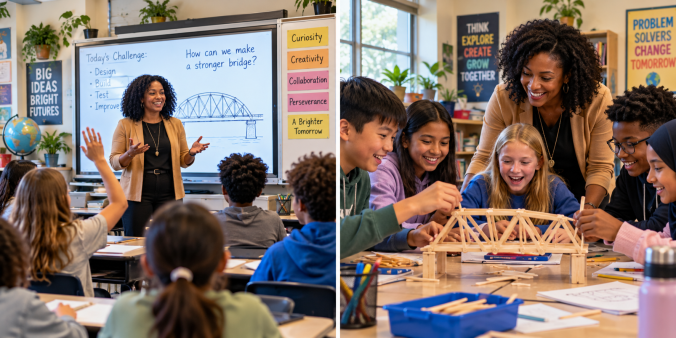
Belonging is at the Core of What We Do in Education

And yet they shape everything.

When I think about the three school districts I have been fortunate to be a part of over my career, the schools that stand out as leaders are never defined by their architecture, the technology and resources they adopted, or the initiatives they launched.

They are defined by how they made people feel. They are the places where students felt seen. Where staff felt valued. Where families felt welcomed. Where people knew they belonged.

In a recent blog post, I reflected on how public education has evolved over the past forty years. I wrote that education has moved beyond simply delivering content toward “a broader and more human-centered vision” that recognizes learning as deeply connected to identity, well-being, and belonging. That idea continues to resonate with me because it speaks to a fundamental truth — learning is a human endeavour before it is an academic one.

Consider any learning environment where students are thriving. What do you notice?

  • You may see engaging instruction.
  • You may observe innovative learning spaces.
  • You may notice purposeful use of technology.

But if you look a little deeper, you will often discover something even more significant.

You will find students who feel known, adults who care, and relationships that are regularly and consistently reinforced which builds trust and respect. You will find a culture where people feel safe enough to take risks, ask questions, make mistakes, and grow. People flourish when they feel connected and safe.

Everything else is secondary.

This is one of the reasons that meaningful educational change can be so challenging.

  • It is relatively easy to purchase resources. It is much harder to build a positive culture.
  • It is relatively easy to launch an initiative. It is much harder to sustain a shared sense of purpose and belonging.

And yet those deeper elements are where the real work lives.

As I reflected in my year-end blog this past June, one of the strongest themes emerging across our district was student belonging. Not because it was a stand-alone initiative, but because we increasingly understand that belonging is foundational to everything else we hope to achieve. Academic growth matters. Literacy matters. Numeracy matters. Career readiness matters. But all of these outcomes become more attainable when students feel connected, supported, and challenged.

Purpose and belonging are not nice additions to learning. They are the foundations for learning.

Throughout this blog, I often return to the idea of “why.” The reason is simple. When we become disconnected from our purpose, it becomes easy to focus exclusively on the mechanics of education rather than its deeper mission.

The question is never simply, “What are we doing?” The more important question is, “Why are we doing it?” The answer to that question shapes every decision that follows.

It influences how we design schools — how we allocate resources — how we support students — how we work together.

It influences whether our efforts become transformational or merely transactional.

When I wrote recently about Truth and Reconciliation, I reflected on the unique role that schools play in bringing together young people from diverse backgrounds, experiences, and perspectives. Schools remain one of the few places in our society where an entire generation learns alongside one another. That reality is powerful. It reminds us that education is not simply about preparing students for employment. It is about preparing them to participate meaningfully in communities and contribute to a better future for all of us.

In other words, it is about helping young people find both belonging and purpose.

As I look back on the many innovations that have moved through education over the years, I continue to arrive at the same conclusion. Most successful initiatives are not successful because of what they introduce. They are successful because of what they reinforce – connection, agency, curiosity and human potential.

Because in the end, the most important work in education has never been the visible work. It is the invisible work of helping people feel that they belong, that they matter, and that their lives have purpose.

And that work changes everything.

Truth, Reconciliation, and the Promise of Education

As another National Day for Truth and Reconciliation approaches, I find myself reflecting on a simple but important question:

What is the role of public education in the journey towards Reconciliation?

For me, the answer is both straightforward and challenging.

Public education has a responsibility to tell the truth. Not a convenient version of the truth. Not a simplified version. The truth.

That means helping students understand the history of residential schools, the impacts of colonization, the intergenerational experiences of Indigenous Peoples, and the lasting effects that continue to be felt in communities across Canada today. The Truth and Reconciliation Commission was clear in its Calls to Action that education must play a central role in reconciliation.

Calls to Action 62 through 65 specifically emphasize the importance of age-appropriate learning about residential schools, Treaties, Indigenous histories, contemporary realities, and the contributions of First Nations, Métis, and Inuit peoples. They recognize that learning the truth is not optional work. It is essential work for all of us in K-12 education.

But education cannot stop at truth alone.

Truth matters because it creates the possibility for something greater:

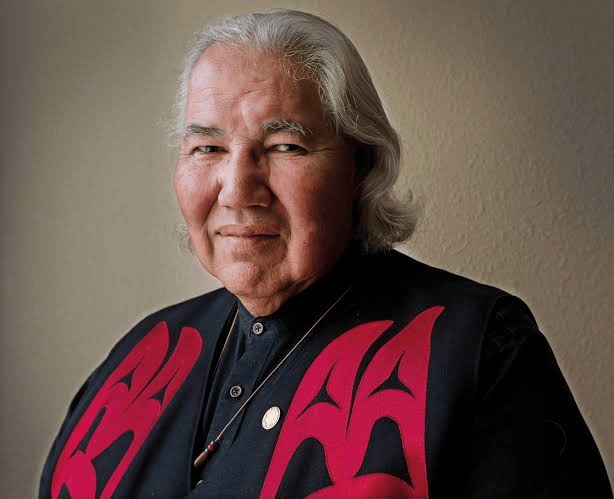
Justice Murray Sinclair (1951-2024)
  • It creates the possibility for understanding,
  • For empathy,
  • For healing,
  • And ultimately, for Reconciliation.

As Justice Murray Sinclair reminded us, Reconciliation is not an Indigenous problem. It is a Canadian one. It belongs to all of us. That is why public education occupies such an important place within this journey.

Every day, millions of students walk through the doors of schools across this country. They arrive with diverse backgrounds, experiences, cultures, beliefs, hopes, and dreams. Schools provide one of the few places where an entire diverse generation can learn together, ask the difficult questions, and be instrumental in creating a better future for all of us.

Education has the power to shape not only what students know, but who they become — and what they do to make our society more equitable, just and responsive.

In Saanich Schools, we continue to embrace this responsibility with humility, purpose, and a recognition that there is still much work to do.

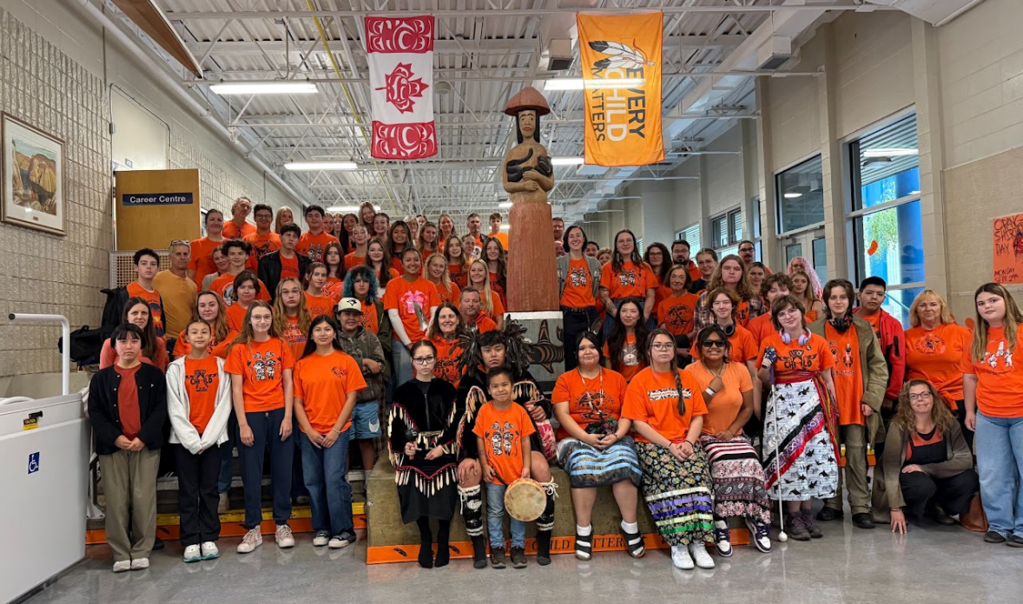
Our district resides on the traditional territory of the W̱SÁNEĆ people. We are grateful for the opportunity to live, learn, and work on these lands, and we recognize that acknowledgment must extend beyond words. It must be reflected in action. Through Indigenous Education programs, support for SENĆOŦEN language learning, partnerships with local Nations, student support services, cultural learning opportunities, and our ongoing commitment to Indigenous Learner Success within our Strategic Plan, we continue to deepen our understanding of what meaningful Reconciliation can look like in practice.

  • Students engaging in powerful conversations about history and identity.
  • Classrooms exploring local Indigenous stories and ways of knowing.
  • Educators thoughtfully examining their own practices and asking how they can create learning environments where every student feels respected, represented, and connected.
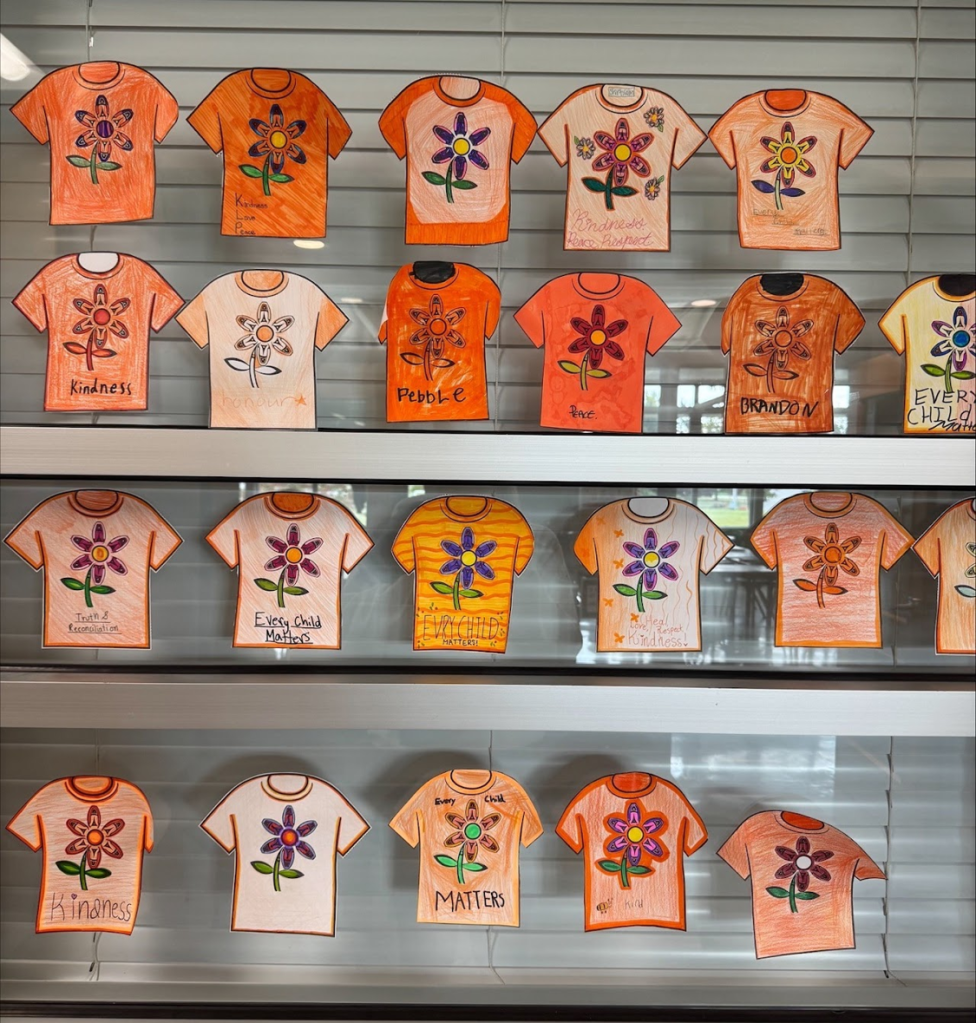
Every Child Matters

These moments matter.

They remind us that Reconciliation is not only about correcting historical misunderstandings. It is also about creating conditions where Indigenous students can thrive while maintaining a strong sense of cultural identity and belonging.

At the same time, honesty requires us to acknowledge that Reconciliation is not a destination we arrive at — it is a journey.

Sometimes progress feels visible and measurable. Other times it feels slower and behind the scenes.

There are gaps to close — learning to be done — voices that still need to be heard. There are still difficult conversations that require courage and persistence.

The reality is that Reconciliation is not the work of a department, a committee, or a handful of passionate educators. It belongs to all of us — each of us has a role to play:

  • Sometimes that role involves learning.
  • Sometimes it involves listening.
  • Sometimes it involves speaking up.
  • Sometimes it involves challenging assumptions we may have carried for years.
  • And sometimes it simply means showing up with humility and a willingness to understand perspectives different from our own.

The good news is that I continue to see this happening throughout our district. And that gives me hope – real hope.

Not the kind of hope that ignores challenges — the kind of hope that acknowledges challenges while believing that improvement is possible.

Perhaps that is one of the greatest gifts education can offer. Education allows us to learn from the past without being trapped by it. It allows us to better understand one another. It helps us replace misunderstanding with knowledge, indifference with empathy, and division with connection.

Most importantly, it helps young people imagine new possibilities.

And that, perhaps, is where hope lives. Not in believing the work is finished. But in knowing that together, we are willing to continue the journey.

Saanich Schools Students Working to Build Understanding

Every September Begins with Hope

Every September, students return to school.

They arrive with backpacks slung over their shoulders, some fresh supplies, and often a mixture of excitement, curiosity, and nervous energy. They reconnect with friends they haven’t seen all summer. They meet new teachers. They wonder what the year ahead might hold.

Of course, there are practical reasons why students return. School is mandatory. Their friends are there. There are new things to learn and new experiences to be had.

All of that is true.

But it runs deeper than that. Every school year begins with a quiet act of hope.

The doors open. Hallways fill. Shoes squeak across polished floors. Someone is finishing breakfast in the parking lot. Another student is already laughing with a friend before the bell rings. A teacher stands at the classroom door, greeting students one by one, communicating something far more important than the day’s lesson:

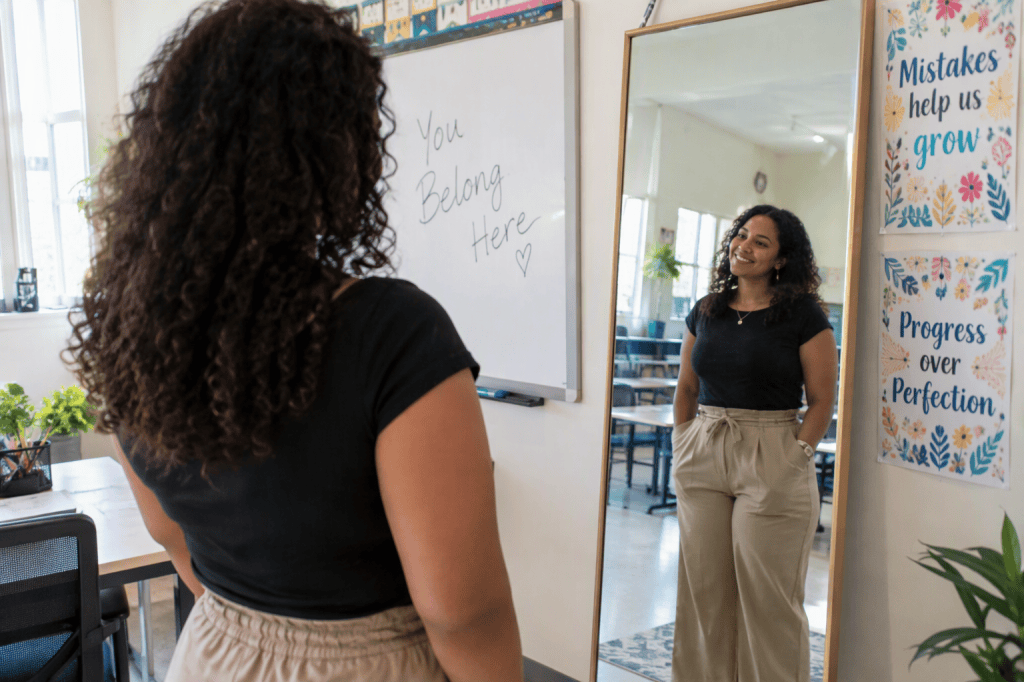
“I see you. You belong here.”

At its best, that simple message is one of the most powerful forces in public education.

And yet, across British Columbia, throughout Canada, and around the world, we are seeing growing concerns about student absenteeism. More students are missing school than in previous years, and educators, families, and researchers are paying close attention. While attendance data tells part of the story, it does not tell us everything.

Because attendance is rarely just about attendance.

Sometimes an empty desk represents illness — sometimes anxiety — sometimes a student who feels overwhelmed and has fallen behind — sometimes it is a young person carrying challenges that remain unseen by those around them.

The reality is that absenteeism is often complex, layered, and deeply connected to issues of well-being, engagement, and belonging.

That is why I believe we need to ask a different question.

Not simply: “How do we get students to come to school?”

But rather: “What makes school a place they want to return to?”

The answer begins with belonging.

Belonging is not a slogan displayed on a wall or a statement inside a strategic plan. It is built through hundreds of small moments every day:

  • It is the teacher who notices when a student seems quieter than usual.
  • The educational assistant who helps a child regain a sense of calm before frustration turns into crisis.
  • The principal who knows students by name.
  • The classmate who saves a seat at lunch.
  • The counsellor, Elder, or other adult who reminds a young person that who they are matters.

These moments may seem small in isolation, but collectively they create something powerful. They create connection.

I have written before that before we teach content, we teach belonging.

The research continues to affirm what educators have long understood through experience. Students who feel connected to their schools are more engaged in learning, more resilient when facing challenges, and more likely to thrive academically, socially, and emotionally.

There is an important leadership lesson in this as well.

When school systems face increasing pressures, from staffing shortages and growing student needs to rapidly changing expectations, it is easy to focus primarily on technical solutions — better tracking systems; improved intervention protocols; stronger monitoring of attendance patterns.

These things matter. But they are not enough on their own.

Students return to places where they feel known. That truth sits at the heart of public education’s purpose.

Schools do not exist simply to deliver curriculum. They exist to help young people discover who they are and who they might become. They create spaces where students grow intellectually, socially, emotionally, and ethically.

When students are frequently absent, that work becomes more challenging. But it also becomes more important.

Chronic absenteeism is not simply a data problem to solve. It is a signal inviting us to pay closer attention.

  • Who is struggling?
  • Who is quietly drifting to the margins?
  • Who feels disconnected?
  • And what might we do differently to help them reconnect?

Of course, schools cannot solve every challenge confronting young people and families today. The pressures facing communities are real, and many extend far beyond the schoolhouse doors.

But schools can still serve as one of the most powerful protective forces in a young person’s life. When life feels uncertain, school can provide stability. When the world feels disconnected, school can create community. When young people begin to doubt themselves, school can remind them that they matter.

So as another school year begins, perhaps the most important question is not: “Who is here today?”

Perhaps the better question is: “What happened here recently that would make a student want to return tomorrow?”

  • Did they feel successful?
  • Did they feel seen?
  • Did they laugh?
  • Did someone make room for their voice?

Those are not soft questions — they are foundational ones.

Because every classroom begins long before the bell rings. It begins with connection. It begins with relationships. It begins with the daily commitment to create schools where students do not simply attend but truly belong.

And when students belong, they come back.