“Why Don’t You Tweet (X?) More, Dave?”

A communication platform needs to be informative, timely and respectful.

Back in 2017 I thought I found one with Twitter.

I started using it in early 2017 determined to make it a significant part of my communication toolbox — a new way of connecting with others in my community on topics of interest in a way that I had not used. I wanted something that was instantaneous, as well as something where respectful dialogue could take place. Platforms such as the nightly news and periodicals provided one-way information flow. Twitter was poised to be my new two-way communication tool.

I was excited and up for the challenge.

I started out pretty strong too, but faded in my use of it over the first year. Today, in 2024, I still use Twitter …. I mean “X” … but do so sparingly. What I’ve found is that what is often presented on it as ‘fact’ is often just unsubstantiated opinion filled with negative and demeaning commentary.

That is not what I want or need from a professional communication tool.

It used to be a wonderful place to share thoughts and build understanding. And while there is still some of that within it, it is often punctuated with insults, accusations, political rhetoric and hyperbole.

I have pretty much lost interest in it as a reliable, professional communication tool.

(More on Page 2)

‘Tis The Season For Hope – Take 2

Almost exactly three years ago to the day, I wrote ‘Tis The Season For Hope. It was December 2020 and we were smack in the middle of the pandemic with no vaccine and dozens of health restrictions all around us.

Times were tense.

Schools had significant changes to their operations — the whole province had restrictions. People were anxious. Emotions were high. I was receiving a ton of email about the pandemic and what we ‘were’ or ‘were not’ doing.

Amongst all of this disruption there was a building sense of calm — of being connected to each other. The Season of Light came to remind us about the many cultural events that begin near the Winter Solstice when November meanders into December — a time when cultures showcase warmth, love and hope with the beauty of light. It was just what we needed as we continued to fight the virus without all of the tools we needed. We needed a break.

Light can do that.

(More on Page 2)

The Glory Years: Ages 2-7

When one talks about The Glory Years we typically refer to those times in our past that are remembered for great success or happiness. Maybe it’s your 20s, 30s or even your 50s. Most people probably don’t think it’s when they were a toddler.

However, the years from 2-7 are when our brains are best primed for learning — so, from a learning perspective these are indeed The Glory Years.

The evidence on this remarkable learning time is clear (e.g. Edutopia: Why Ages 2-7 Matter So Much for Brain Development. Neural connections, and hence learning, increase when we are young, but not in a uniform progression.

The first critical period of rapid brain development happens around ages 2 to 7 — the second and final one happens during adolescence. Between the ages of 2 and 7 the nerve connections between brain cells (called synapses) actually double in number, accelerating learning. After age 7 the brain begins to ‘trim’ its neural connections to focus on the areas most useful for daily life. So, it’s during the early years that learning things like languages, interrelationships between concepts, and the mastering of physical tasks like running or riding a bike happen with greater ease.

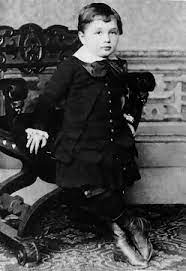
Albert Einstein

If you are familiar with Albert Einstein, the extraordinary scientist from the early part of the 20th century, you may also know that his childhood was anything but normal. He struggled to even speak as a young child, and had some significant issues in school including being expelled. But, as difficult as his early years were, he was incredibly successful in some areas such as playing the violin, studying magnetism, and being able to think in pictures rather than words. His well known adult accomplishments can likely be tied to his diverse childhood experiences.

(More on Page 2)