The First Lesson is the Most Important One

Before we teach content, we teach belonging — about the importance of children seeing themselves reflected in relationships, culture and words in our schools. Every September when students arrive — some for the first time, some returning for their 13th year — we ask ourselves a question:

Do students feel like they belong?

The research is clear — when students experience belonging — engagement rises, absenteeism falls, and achievement nudges ahead. Studies show that while a school district can help shape the overall sense of community, it is the adults who have daily contact with students that make them feel like they belong. And it is mostly teachers who provide those personal conditions necessary for the positive feelings of belonging at school.

Teachers make it all work.

It Begins in Kindergarten

Kindergarten — that place where the magic begins. One of the early lessons for our newest students is also one of the most important — and our newest students learn the lesson through their play:

How do we interact with others? How do we learn to accept our differences and celebrate our uniqueness? How do we see our worth and value?

It begins by finding ways to honour all people — including those who have been here on this land for thousands of years. For me as Superintendent, the work we do on understanding and incorporating Indigenous ways of knowing is paramount to the mission we have in public education. The local W̱SÁNEĆ First Nation community has a fabulously rich culture, language and traditions that helps our district to ground our work — from Indigenizing the curriculum, building cultural competencies in our staff, introducing all K-students to the local language, and most importantly, building understanding, belonging and trust on a daily basis.

The Land, The History, The Ways of Being

In Saanich, teaching about belonging often begins with teaching about place — about the ancestral territory of the W̱SÁNEĆ people — stewards of these lands and waters since time immemorial. We are fortunate to have a strong, respectful and collaborative working relationship with the local First Nation which builds a broad community understanding about the history and culture of those who have been here for thousands of years. We are helping to reinvigorate the local and unique SENĆOŦEN language — from district‑wide Kindergarten lessons to programs at a number of our schools. School‑based Indigenous Education teachers support cultural and academic learning, and this past year, community partners celebrated a new, locally developed, district course on W̱SÁNEĆ culture and history — born from student voice and designed with significant contributions from local elders and knowledge keepers.

We also learn through story on the land — using local W̱SÁNEĆ stories and place‑based learning to strengthen oral language and connection. The Indigenous Education page on our district website is filled with links to a wide variety of items including local art that can be loaned, learning resource kits, online virtual resources and a host of other items that provide a rich fabric of opportunities to truly embed Indigenous ways of knowing and being into classroom lessons. The monthly Indigenous Education bulletin highlights new and timely resources for teachers at all levels and subject areas in our system.

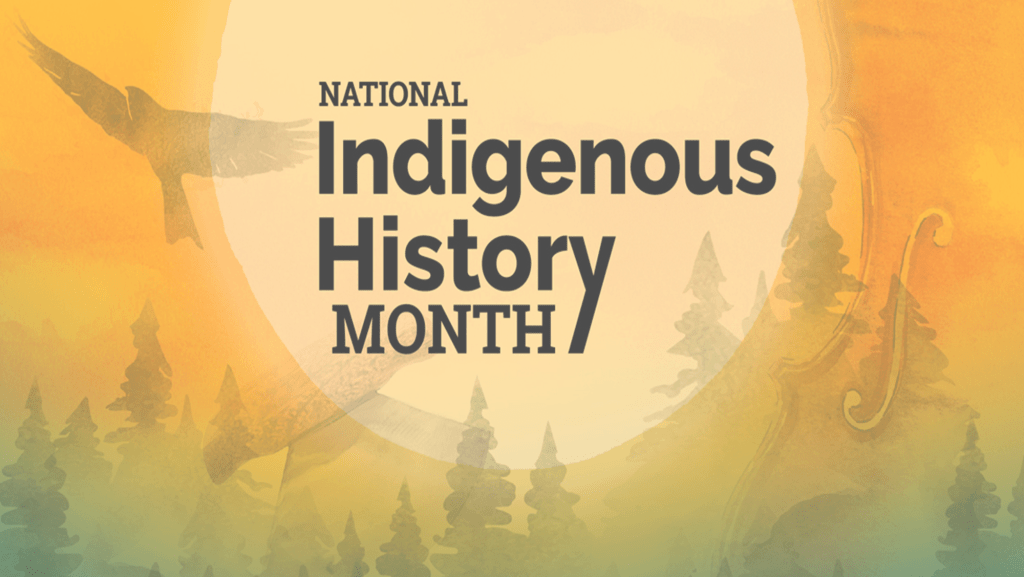
Celebrating the History and Contributions of Indigenous Peoples Across Canada

Belonging Isn’t a Program

Belonging isn’t a program or a class — it’s a practice. When we know names, notice strengths, honour identities, and communicate clearly, students show up with courage, engagement and excitement.

And, when we recognize the people who have been here for thousands of years, we help build a community that is respectful and inclusive.

We build belonging.

Happy National Indigenous History Month everyone!

Hitting the Sweet Spot – Criticism and Praise

In every classroom — at every grade level — a quiet tension exists between correction and encouragement. As educators, we find ourselves navigating the delicate balance between offering constructive criticism and celebrating effort.

Can well-meaning praise sometimes do more harm than good? Is that possible?

An article in Forbes magazine, “Criticism Is Good, But Praise Is Better,” reminds us that while feedback is essential, the tone and intent behind it can shape a student’s confidence and motivation. I recently wrote a blog post about Confirmation Bias (Why Students and Adults Struggle to Be Wrong — and How to Help, Dec 2025) where I outlined the vulnerability of students whose self-image is still developing and can be inadvertently and negatively influenced by both praise and criticism.

The way we speak to students can dramatically influence not just their academic outcomes, but their belief in themselves. Finding the balance — or sweet spot — for optimal personal growth is tricky.

When used well, praise is a powerful motivator. A teacher once told me how her classroom transformed when she shifted from pointing out mistakes to highlighting effort: “I started saying things like, ‘I noticed how you kept trying even when the problem was hard.’” The result? Students became more engaged, more curious, and more willing to take risks.

But, not all praise is created equal.

When praise becomes automatic or overly general — “Great job!” or “You’re so smart!” — it can lead to Confirmation Bias, where students begin to seek validation rather than growth. They may cling to familiar strategies, even when those strategies aren’t working, simply because they’ve been praised for them in the past.

A student praised repeatedly for their vivid vocabulary might resist feedback about their sentence structure. Why change what’s already being celebrated? In these moments, praise can unintentionally close the door to deeper learning.

So, it’s important to recognize that giving praise runs the risk of actually stifling creativity and broader thinking.

That’s why the most effective praise is both specific and reflective. Effective praise acknowledges what’s working while gently inviting students to consider alternatives. For example: “I love how you used descriptive language here. What do you think would happen if you varied your sentence lengths to build suspense?” This kind of feedback affirms effort while encouraging exploration. It minimizes the risk of contributing to confirmation bias.

Parents can adopt this approach at home, too. Instead of saying, “You’re amazing at math,” try, “I noticed how you broke that problem into steps—that strategy really worked. What might you try next time if it gets trickier?” This not only builds confidence but also fosters a mindset of adaptability and growth.

Ultimately, the goal isn’t to either eliminate criticism or flood students with praise.

It’s to create a culture of thoughtful feedback — striking a balance where students feel safe to take risks, reflect on their choices, and revise their thinking. When we do this, we’re not just helping them succeed in school. We’re helping them become resilient, reflective learners for life.

So, praise wisely, correct with care, and you’ll keep the door open for personal growth.

The Day I Became “Sir”and Other Signs I’m Not 25 Anymore

I remember it clearly — the time someone first referred to me as ‘Sir’.

I was a first-year teacher — fresh from university — and could easily pass for Grade 11 or 12. When a student in my class addressed me with that formal little word, I was stunned. “Sir?” I thought. “That’s what you call someone’s dad — not me.”

Fast forward a couple of years to present day, and ‘Sir’ is now a regular part of my daily soundtrack — at the grocery store; on the sidewalk; even at my favourite coffee shop –though the baristas there now greet me with my name, which might be a sign I’m spending a bit too much time caffeinating.

Something to reflect on.

Even the man in the mirror every morning — who’s sporting a few more grey hairs than should be there — doesn’t have any answers either for the regular reference to ‘Sir’. He just stares back, amused, as if to say, “You’re not 25 anymore, Dave. Let it go.”

Now, before you leave this post because its looking like a vanity post (and maybe it is a little), please stick with me. Because, I want to talk about transitions, especially those affecting our students — those inevitable life shifts that sneak up on us, whether we’re ready or not.

Every one of us goes through them.

Some are joyful — marriage, kids, landing that first real job. Others are harder — illness, loss, unexpected detours. And in between, there are the subtle ones — the slow realization that you’ve changed, that your role in the world is evolving, that you’re no longer the ‘young one’ in the room.

Lately, I’ve been reflecting on my own life transitions — both personal and professional. Were they good? Did they lead to growth? Would I have done anything differently if I’d known what was coming? These questions don’t have easy answers, but they’re worth asking. Because transitions shape us. They challenge us. And they remind us that nothing stays the same forever.

Which brings me to our students. If we, as adults, find transitions tricky, how are we preparing young people for the ones they’ll face? Are we helping them build the resilience they’ll need when life throws them a curveball? Are we giving them the tools to navigate a world that’s changing faster than ever — where AI, climate change, social media and social upheaval are part of the daily news cycle?

The truth is, life in 2025 is complex. And while every generation has faced its own version of ‘hard‘, today’s challenges are uniquely unpredictable. That’s why education matters more than ever — not just for teaching facts, but for helping students develop the mindset to adapt, to persevere, and to thrive.

Education is that critical ‘people builder’ space where we have the privilege of providing the children and youth of our community with the abilities of thinking critically and creatively, being compassionate and welcoming of others, and engaging their curiosity to be life-long learners. We hold that power and responsibility.

As we head into another new school year, the importance of transitions continues in its importance for our students.

And for me?

I’m still in the game — loving what I do. Still passionate about public education. Still learning. Still growing. And yes, still secretly hoping someone will check my ID when I order a glass of wine — just once, for old time’s sake.

(This post was inspired by the author prompting AI on the idea of the importance of life transitions. The personal stories and anecdotes are real and written without AI.)