June is a great month — a time when we celebrate student successes. It is also a great time of reflection — not just on what we did, but on why it mattered.

As usual, the school year has been busy — full of change, full of momentum, and, as always, full of people doing great work on behalf of students. As I look back — both on the year and on the blog posts that helped me process it — a few themes rise to the surface.
Leading With Our “Why”
If there’s a thread that continues to run through everything I write, it’s this idea of why.
Throughout the year — from late summer planning to mid-year check-ins to my spring reflections — I found myself returning to the same reality — public education is about people creating the conditions where students feel connected, supported, and challenged.
Many of my posts this year explored the why of public education — the purpose of what we do. And when things felt complex — which they often do — remembering to come back to our why helped to ground the conversations.
Because when we’re clear on why we exist as a system, decision-making becomes a little less noisy and a lot more focused.
The 2022-2027 Strategic Plan: Progress You Can Feel
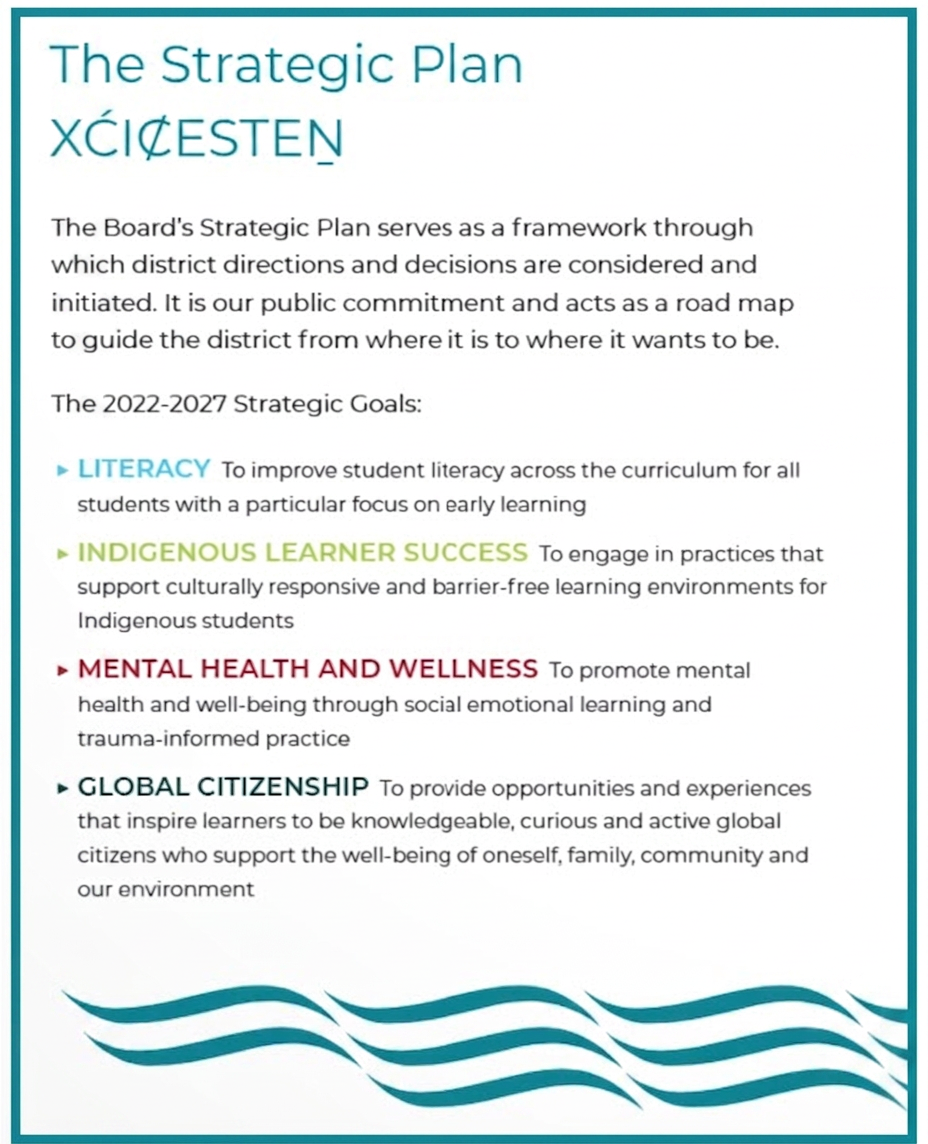
The Board of Education’s 2022–2027 Strategic Plan is the big why for the District, as it continues to shape the direction we take as a system — but more importantly, it’s also shaping day-to-day experiences in our classrooms.
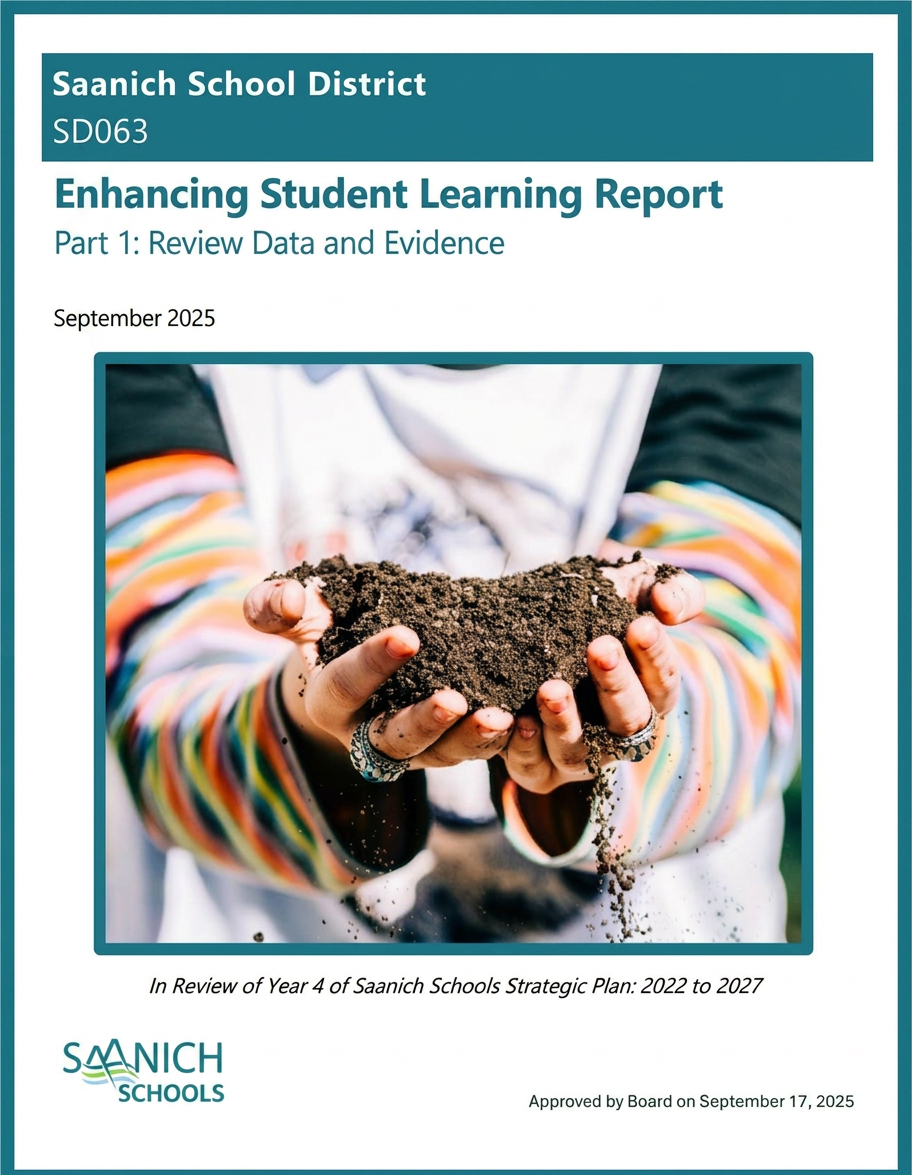
We check on our success against the plan in our annual Enhancing Student Learning Report which gives us a meaningful opportunity to step back and ask: Are we making a difference?
What stood out wasn’t just the data — although there are encouraging signs there — it was the story behind it:
- Increasing attention to student voice and belonging
- Ongoing work to support Indigenous learners and embed local ways of knowing
- A continued focus on literacy and inclusive practices
- A growing recognition that personal well-being and learning are deeply connected
Progress in education is rarely linear, and it’s never fast enough for those of us working inside it. But there is something powerful happening when you start to see alignment — when classroom, school, and district priorities move in synergy.
This year is one of those moments.
The Reality of AI… and the Case for Being Human
It would be impossible to reflect on this school year without acknowledging one of the biggest shifts we’re seeing– the rapid emergence of Artificial Intelligence. AI is now part of our landscape — in classrooms as well as in the district office.
Our position on AI in Saanich Schools has been articulated in our Framework for Artificial Intelligence. We’ve taken a stance that’s grounded and realistic.
We’re not ignoring it. We’re not fearing it. We’re learning alongside it.
But at the same time, I’ve been thinking a lot about what this means for education. AI might be everywhere — but Human Intelligence is the point. Because the future isn’t going to reward students for simply having answers. AI already does that. The future belongs to those who can:
- Ask thoughtful questions
- Think critically
- Show empathy
- Collaborate meaningfully
- Make sense of complexity
In other words, the future belongs to people who are deeply human. And so, as much as we continue to look at how AI might integrate into learning, we’re also doubling down on the things that make education irreplaceable — relationships, curiosity, and connection.
The Power of Relationships
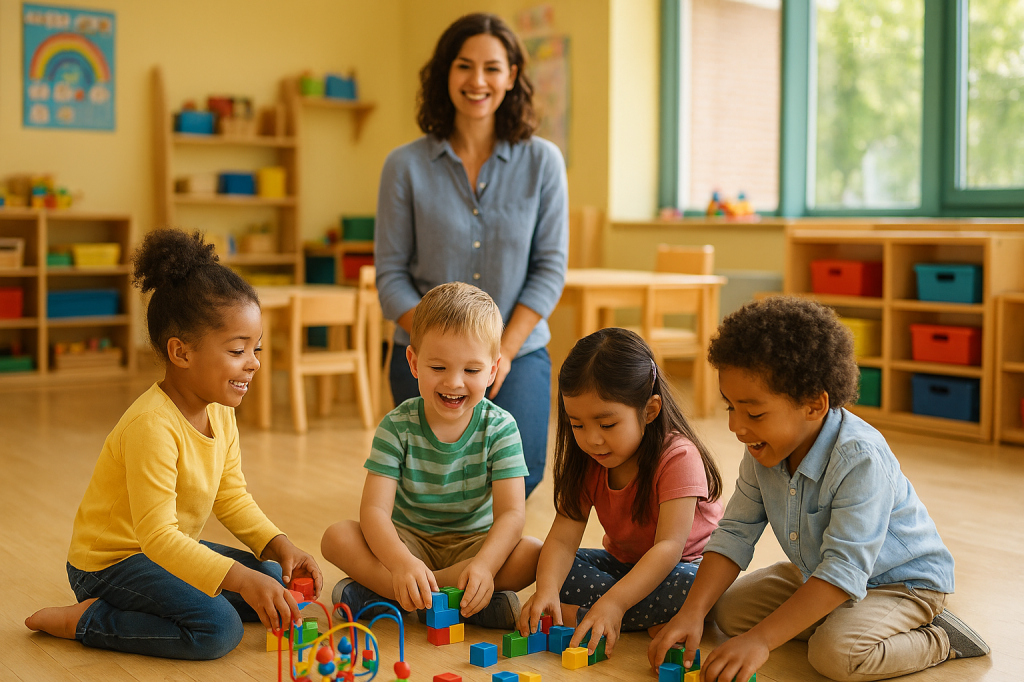
If there’s one thing that continues to stand out across our schools, it’s this: relationships are still the most powerful driver of learning.
Throughout the year, I had the opportunity to see this in action — in classrooms, hallways, meetings, and community spaces.
- A teacher taking the time to check in with a student who’s struggling.
- A team collaborating to support a learner in a more inclusive way.
- A school creating space for student voice to genuinely influence decisions.
These aren’t new ideas. But in a world that increasingly values efficiency, they are more important than ever. And they showed up again and again in the stories I found myself writing about this year. Because no matter how much education evolves, the human connection at the center of it doesn’t change.
Heading Into Summer … and What Comes Next
As we close out the 2025–2026 school year, there’s a lot to be proud of — but also a recognition that the work continues.
Education doesn’t really have a finish line. It evolves. It adapts. It responds to the world around it. And right now, our world is moving quickly. But if there’s one thing I’m confident in, it’s this — we have people across Saanich Schools who are committed to doing this work thoughtfully, collaboratively, and with purpose.
So as we head into summer, my hope is that everyone finds a bit of time to rest and recharge — but also to reflect. Not just on what we accomplished, but on why it matters. Because when September comes that clarity of purpose will matter more than ever.
Thanks for reading along this year — for being part of my thinking and the conversation.
Wishing everyone a wonderful summer break …