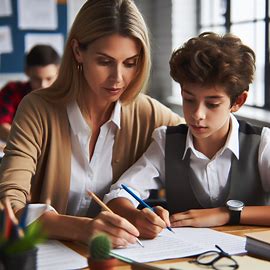
The beginning of my career had me teaching high school Science, Chemistry and Math. One of my fondest memories was organizing science fairs at two different schools. The science fair was a great way for my students to expand both their knowledge in an area of interest, as well as give them practical experience in the scientific method.

Here’s an example of a typical conversation I might have had:
Two Grade 9 students set out to test whether plants grow better when exposed to music. They were excited, confident, and — after two weeks — convinced they were right. The plants exposed to music looked ‘happier’, they told me.
But when I gently pointed out that the control group had actually grown taller, they hesitated. “Maybe the music plants are just slower starters.”
The students aren’t being dishonest. They are being human — exhibiting something called Confirmation Bias.
Confirmation Bias: Our brain’s tendency to seek out, interpret and remember information that supports what we already believe.
It’s why a student who thinks they’re ‘bad at math’ might ignore a good test score one day, or why a child convinced their teacher or another student doesn’t like them may interpret neutral feedback from others as criticism.
It’s not a character flaw. It’s a feature of cognition — especially in an adolescent brain.
The Brain’s Shortcut System
Our brains are wired for efficiency. Every second, we’re bombarded with sensory input, and to make sense of it all, the brain relies on heuristics — mental shortcuts that help us make quick decisions. Daniel Kahneman, Nobel laureate and author of Thinking, Fast and Slow, describes this as the interplay between “System 1” (fast, intuitive thinking) and “System 2” (slow, analytical thinking). Confirmation Bias lives in System 1 — it’s fast, automatic, and invisible.
This heuristic shortcut helps us feel safe and certain. Confirmation Bias allows us to make sense of something very quickly. But, in a learning environment, it can unfortunately also close the doors to a more complete understanding.
The Adolescent Brain and Belief Formation
Children and adolescents are especially vulnerable to Confirmation Bias. Their prefrontal cortex — the part of the brain responsible for critical thinking and self-regulation — is still developing well into their twenties. Research shows that the adolescent brain is particularly sensitive to social feedback. Beliefs formed during adolescence can become deeply entrenched and difficult to unseat — hence, the problem of changing “I can’t do math” or “Susie doesn’t like me”.
In school, this means that early experiences — both positive and negative — shape how students see themselves as learners for years to come.
When Confirmation Bias Meets the Curriculum

Confirmation Bias doesn’t just affect how students see themselves. It influences how they engage with content. A student who believes that History is ‘boring’ may skim over content that is actually really engaging. Someone who thinks that science is‘ too hard’ might dismiss their own curiosity on the topic. This same idea applies to every subject area depending on what a student believes — they can’t do math, sing, dribble a basketball, or bake a cake.
And when students are asked to explore controversial or difficult topics — things like climate change, historical injustices, or ethical dilemmas — Confirmation Bias can make it harder to consider multiple perspectives. This can close the door to exploring deeper, more complete truths.
Teachers as Cognitive Coaches
Educators play a powerful role in shaping how students process information. The way we frame questions, give feedback, and design lessons can either reinforce or disrupt Confirmation Bias.
When students actually believe their abilities can grow, they’re more likely to embrace challenges and revise their thinking. But this requires intentionality on the part of teachers, parents and others who work with them. A well-meaning comment that they’ve done a ‘good job‘ can actually reinforce a fixed belief just as easily as it can encourage growth.
Disrupting Confirmation Bias
So how do we help students see beyond what they already believe?
- Ask open-ended questions — Invite multiple interpretations of the same issue or event.
- Encourage metacognition — Have students reflect on how they’re thinking, not just what they’re thinking.
- Introduce disconfirming evidence — What would it take to change their mind?
- Model intellectual humility — Share moments when you’ve changed your own thinking.
Technology and Media
In today’s world, Confirmation Bias doesn’t stop at the classroom. In a previous post (Implicit Bias: Yup, I’m Talking About You! – Feb 2022) I discussed how social media (e.g. Instagram, TikTok, X, Facebook) is designed to confirm our bias by showing us posts and reels that agree with us — in direct contradiction to what we hope to be doing in classrooms. For young minds still forming their worldviews, this can reinforce narrow thinking as they settle into the belief that they must be right because “I see it everywhere on social media.“
In Saanich Schools, teaching digital literacy — how to evaluate sources, question algorithms, and seek diverse perspectives is something we put a lot of effort into and will continue to do so.
A New Kind of Resilience
Helping students challenge their own beliefs isn’t about changing their views on being right. It’s about building cognitive resilience — the ability to sit with uncertainty, to revise one’s thinking, and to grow — to be confident enough in oneself to be open to other perspectives and, yes, to maybe being wrong.
And, let’s be clear, it’s not just students. Many adults also have a difficulty being wrong.
It’s why we see slow change on things that are destructive or hurtful — we know better, but we still carry on. Think of things like climate change, growing income disparity, intolerance towards others, stereotyping, and bigotry.
All of them wrong, yet they persist.
Building cognitive resilience is not just learning — it’s transformation. It’s building reflective, curious young people who are open to new ideas that can solve existing and future problems.
Teaching for Curiosity, Not Certainty
Education isn’t about filling students with facts. We have come past the point of thinking the goal of K-12 education is simply placing more facts and figures into their heads — yes, there are important lessons from history, science, math, reading, and physical literacy — however, education is about teaching students HOW to think, HOW to question, and HOW to stay curious — HOW to be open to conflicting information that should challenge one’s current understanding.
It’s about them being confident enough in themselves to be unsure.
Confirmation Bias is a natural part of being human. But when we help students recognize it, name it, and work through it, we give them a gift far greater than facts and certainty.
We give them the tools to keep learning.
(This post was written with assistance of an AI prompt on exploring confirmation bias in education. I changed much of the content and added significantly to the final product.)