Stories used as a teaching method bring students into a new dimension – a place where there’s meaning and personalization. They provide relevance and context to otherwise ordinary facts.
When I was in the classroom I used stories all the time when teaching. Sometimes the stories were true (e.g. news articles, personal accounts) and sometimes they were fantasy (e.g. imaginary beings like Marvin the Mole when I taught Chemistry). Stories brought some ‘zip’ to my lessons — they made the potentially dull information come alive with emotion, intrigue or imagination. I know that I loved telling them and I’m pretty sure the students appreciated the link to something outside of curricular content.
Brain science concurs.
Stories help kids engage with the content to a deeper level by adding meaning. And as I’ve mentioned in a previous blog post, when we create meaning what we are actually doing is building strong neural connections to other memories. These inter-relationships between ideas are critical to students having greater retention of the material and contextual understanding of its relevance.

Neuroscientists have discovered that our brains respond differently when we listen to a recitation of facts than when we listen to a story. Listening to facts mainly stimulates the two language-processing areas of the brain. However, when we listen to a story, additional parts of the brain are also activated—regions involved with our senses and motor movements help listeners actually “feel” the descriptions. As the neuroscientist Uri Hasson explains, “A story is the only way to activate parts of the brain so that a listener turns the story into their own idea and experience.”
Amy Schwartzbach-Kang, Edward Kang, Edutopia, Sept 2019
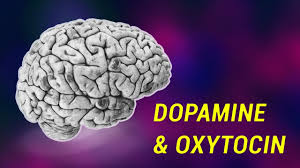
Brain researchers have found another interesting link. They have discovered that the brain chemicals dopamine and oxytocin are released in measurable quantities when we listen to a story. Dopamine increases motivation and attention, while Oxytocin promotes social, empathetic behavior. In essence, both of these chemicals help the listener connect to the story so that the information is more personally meaningful.
Telling Stories in the Classroom = Better Comprehension by Students
So, the next time you want someone to remember something tell them a story — better yet, one filled with imaginary superhero powers — if for no other reason than because it’s cool!
 The Power of Why